
Last updated November 4, 2026
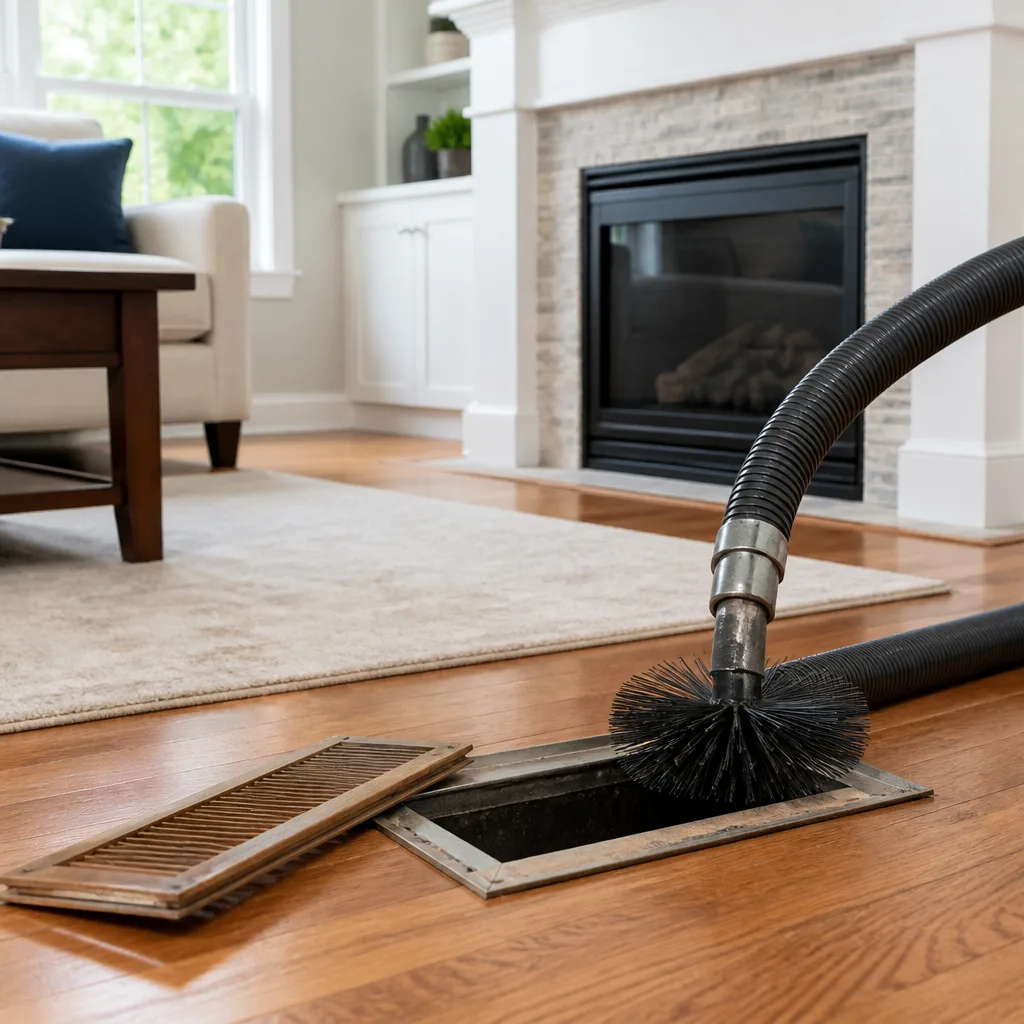 Whole-home duct cleaning
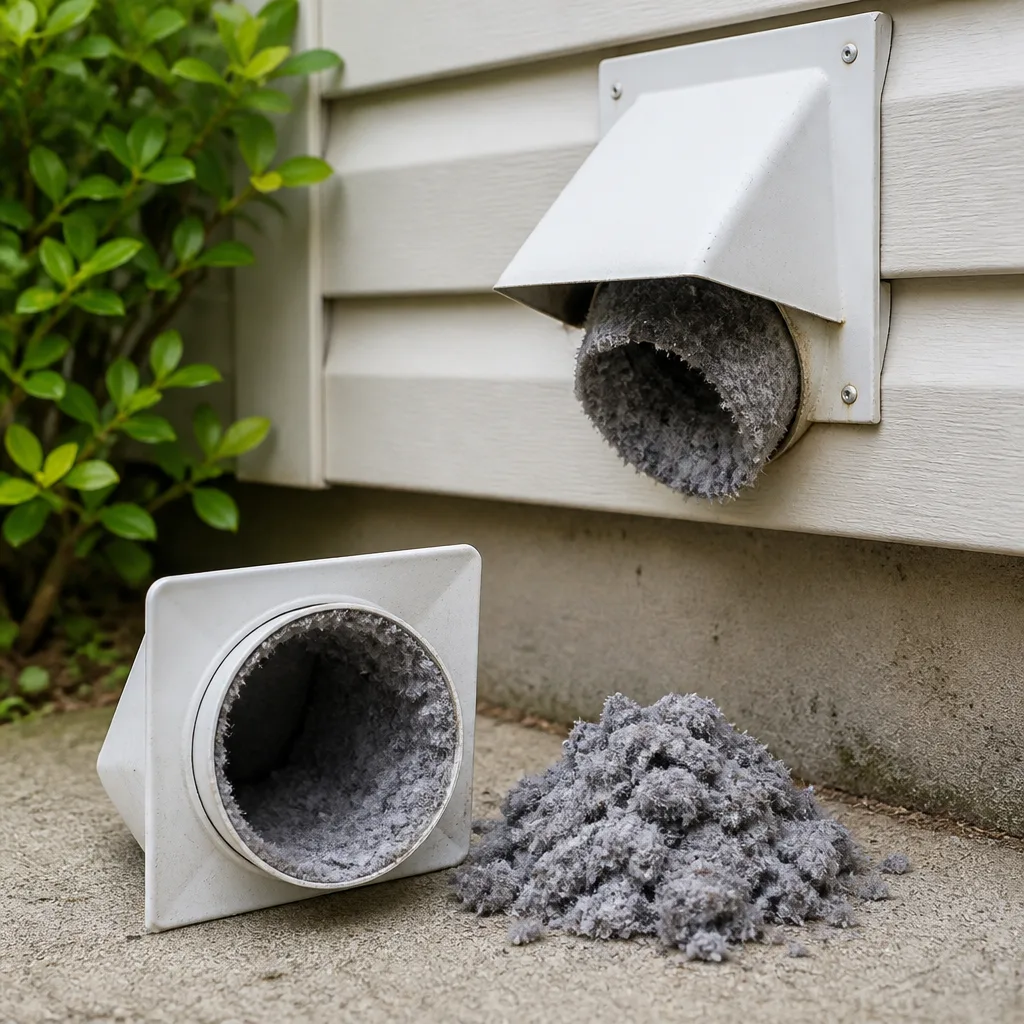 Dryer vent cleaning
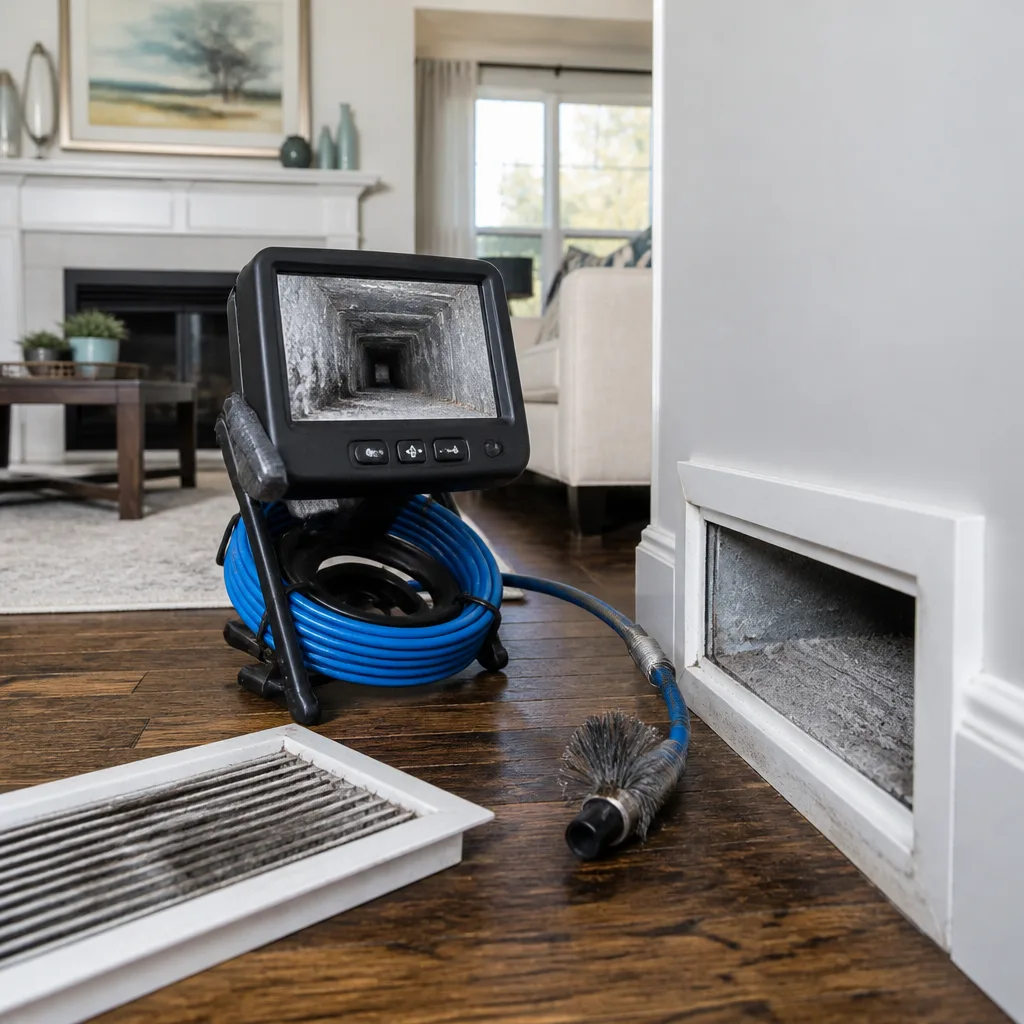 Camera inspection
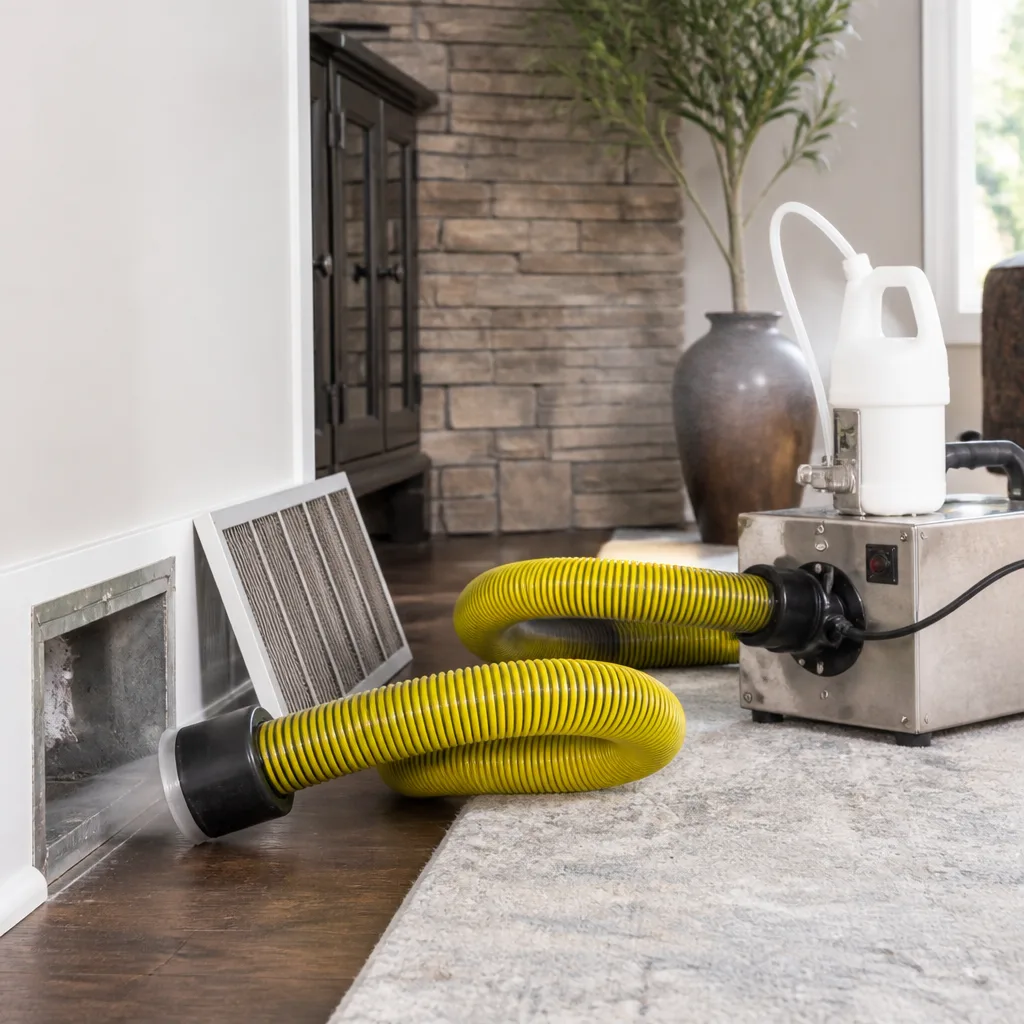 Sanitizing & deodorizing
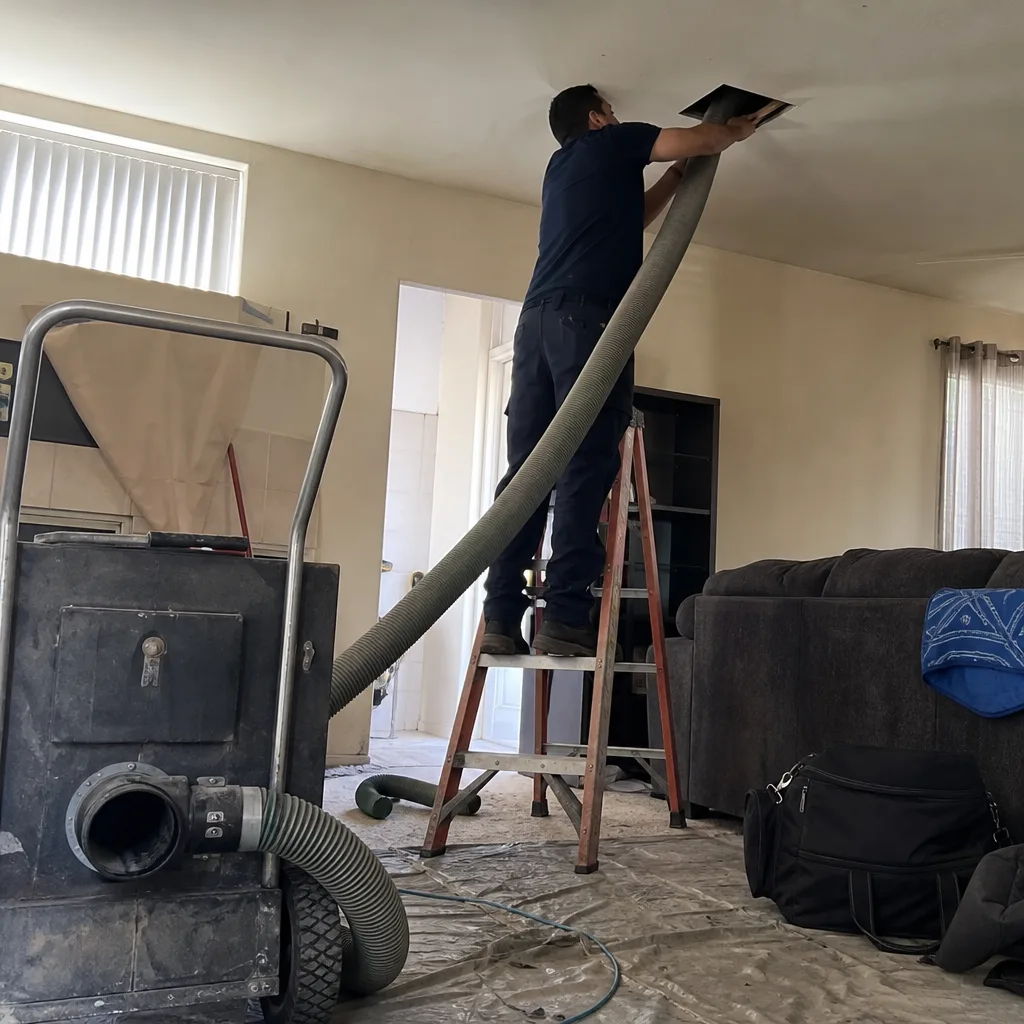
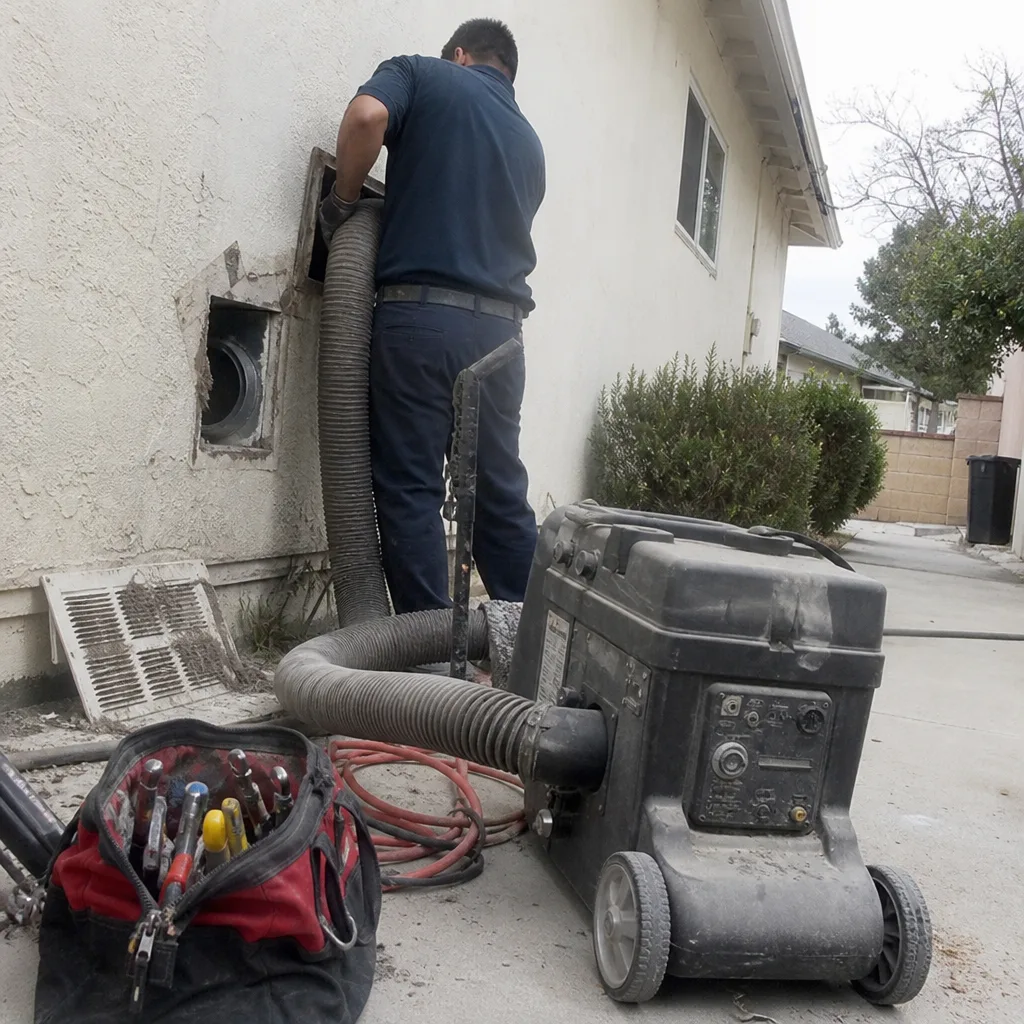
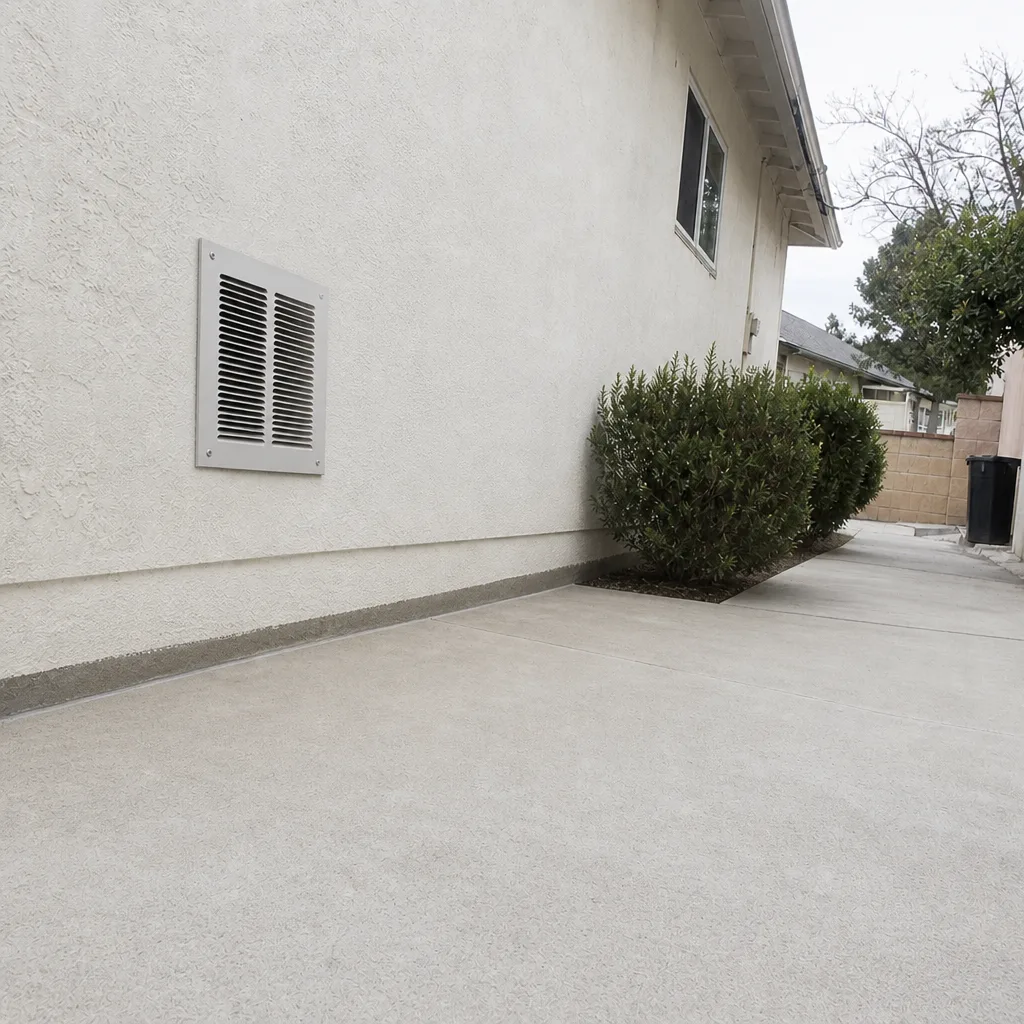
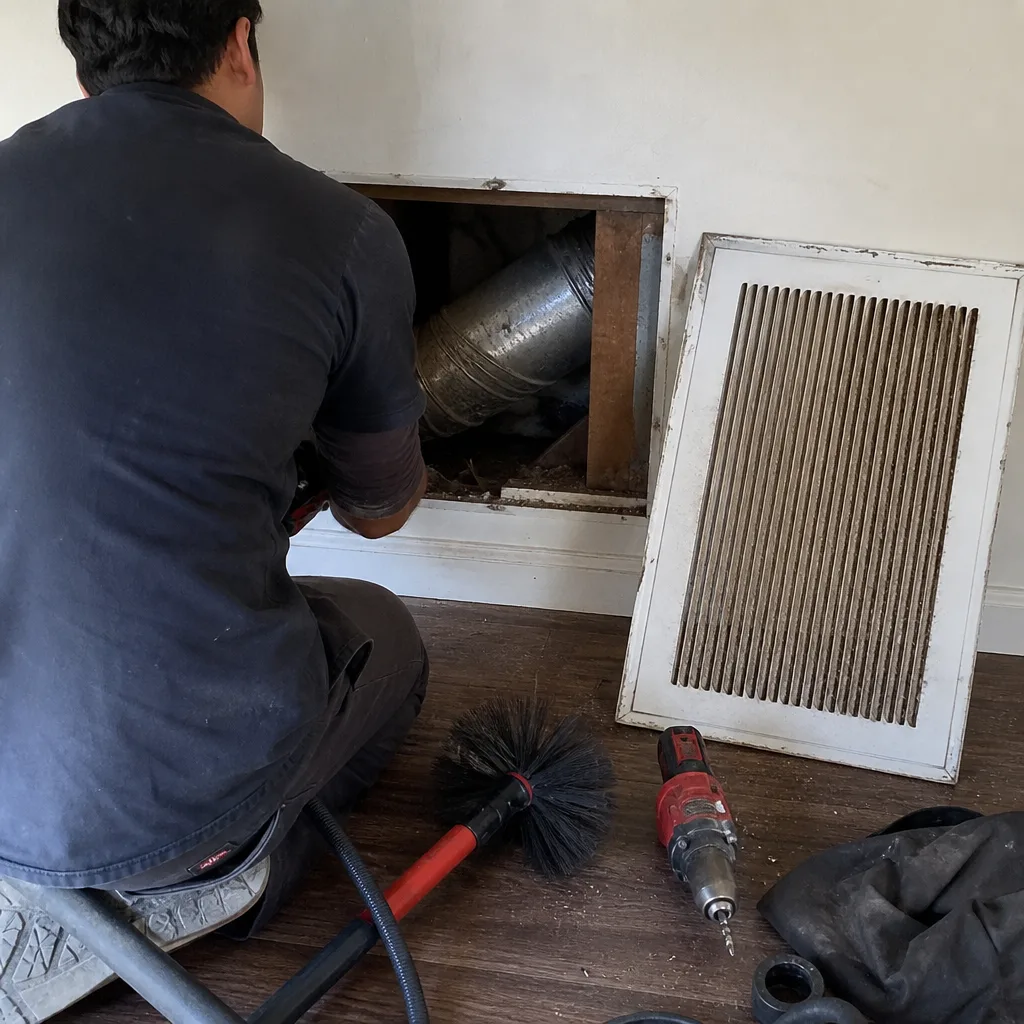
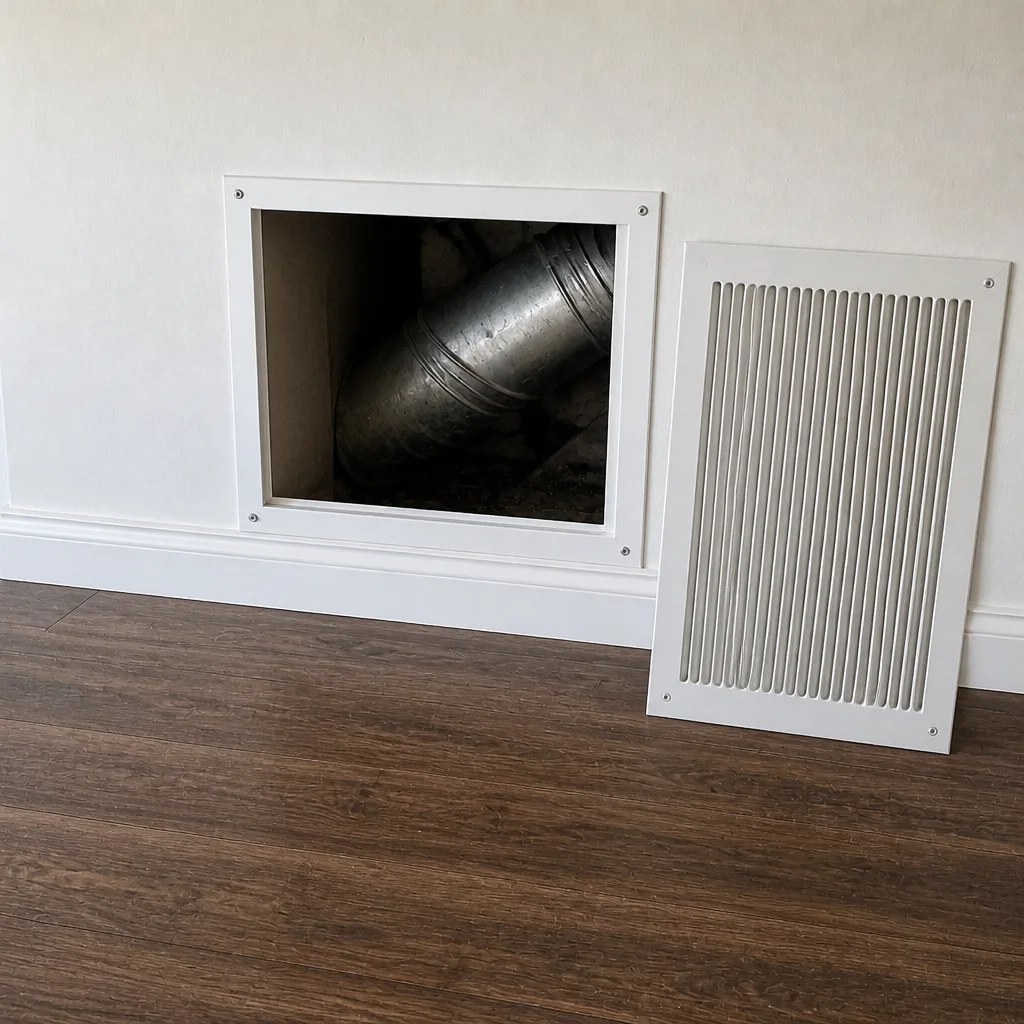
Whole-system duct and dryer vent check with before-and-after photos - you see exactly what came out of your vents
That "$99 whole-house special" is a bait ad - the real number appears once they are in your hallway, or the "clean" is a shop-vac at the register. We photograph the inside of your ducts before and after instead.
Air Duct Cleaning Emergency Preparedness Guide for Buena Park Homes
Most Buena Park homeowners have earthquake kits, go-bags, and a family meeting spot. What almost nobody has is a plan for their duct system, even though it’s the respiratory system of the house. When wildfire smoke settles over the city or a moderate quake rattles the walls, the ducts that quietly move air through your home can turn into a delivery system for whatever is outside, or silently disconnect in an attic you never visit. This guide explains what to do with your air ducts before, during, and after the two emergencies that actually threaten Buena Park: wildfire smoke events and seismic activity. You’ll learn how to prepare your duct system before fire season, how to operate your HVAC when the air outside turns brown, how to assess the damage after the emergency passes, and how to document everything your insurance company will ask about.
Quick Answer
Air duct emergency preparedness for Buena Park homes means sealing duct penetrations before wildfire season, switching your HVAC to recirculation mode during smoke events, and inspecting duct connections after any earthquake strong enough to rattle cabinets. Post-wildfire smoke cleaning requires professional-grade contact-based equipment, not a visual wipe-down, and post-earthquake duct disconnection in attics and crawl spaces often goes unnoticed for months. The cost of a duct assessment is minor compared to running a compromised system for a full season.
Styles & brands we work with
- Whole-home duct cleaning
- Dryer vent cleaning
- Camera inspection
- Sanitizing & deodorizing
Table of Contents
- Wildfire Smoke and Your Duct System: The Real Risk
- Pre-Emergency: Duct Sealing as Smoke Defense
- During an Air Quality Event: Operating Your HVAC Correctly
- Post-Wildfire Smoke Assessment: What Actually Happened Inside Your Ducts
- Post-Earthquake Duct Inspection: Finding the Disconnects
- Documentation for Insurance: What to Photograph and Request
- Why Equipment Matters When the Stakes Are Emergency-Level
Wildfire Smoke and Your Duct System: The Real Risk
Buena Park sits in a geography where wildfire smoke from the Santa Ana Mountains, the Angeles National Forest, and larger regional fires routinely drifts across Orange County. The smoke that reaches your neighborhood is not just an outdoor annoyance. It’s an indoor air quality problem that your duct system can either mitigate or amplify.
The mechanism is straightforward. Your HVAC system creates pressure differences. When the blower runs, it pulls air through the return ducts and pushes it through the supply ducts. If those ducts have even small gaps, cracks, or loose connections, the negative pressure on the return side acts like a vacuum, pulling unfiltered air from attics, wall cavities, and crawl spaces directly into your living space. During a smoke event, that means the air you’re breathing inside your home is partly attic air laced with whatever is outside. Sealed duct systems reduce smoke infiltration dramatically because they prevent that pressure-driven leakage. Leaky systems do the opposite, actively pumping smoke-laden air into the rooms where your family sleeps.
We’ve inspected duct systems throughout Buena Park after smoke events, and the pattern is consistent. Homes with sealed supply plenums and intact return connections show far less particulate buildup inside the ducts and far lower indoor particulate levels during the event itself. Homes with disconnected returns, loose registers, or unsealed boots show visible smoke residue even months later.
Pre-Emergency: Duct Sealing as Smoke Defense
The single most effective thing a Buena Park homeowner can do before fire season is verify that their duct system is sealed at every connection point. This is not an expensive project, and it pays off in both air quality and energy efficiency every month of the year, not just during emergencies.
Here are the priority areas to address before the next wildfire smoke event reaches Orange County:
- Supply plenum connections. Where the main trunk line meets the furnace or air handler, the sealant is often cracked or missing entirely. This is the highest-pressure point in the system, and leaks here push conditioned air into the attic instead of your rooms, which then forces the system to pull replacement air in from wherever it can.
- Return duct joints. Return ducts operate under negative pressure, which means every loose joint is a direct pathway for attic air to enter your home. During a smoke event, this is how smoke gets into rooms even with windows closed and a good filter installed.
- Register boots. The connection where each supply duct meets the floor, wall, or ceiling register is a frequent leak point. These are accessible from below or from the attic, and sealing them is a straightforward job for a technician who knows what they’re doing.
- Filter housing. A filter that doesn’t fit its slot tightly lets unfiltered air bypass the filter entirely. During smoke events, this bypass is a meaningful source of particulate ingress.
If you’re not sure how your system is currently performing, a visual inspection with a camera scope can show you exactly where the leaks are. The professional-standard approach for Duct Cleaning Buena Park is to inspect before recommending any sealing work, because sealing a duct system starts with knowing where the gaps are. Not all systems need full sealing, but nearly every home built before 2010 in this area has at least one connection that should be addressed.
During an Air Quality Event: Operating Your HVAC Correctly
When the AQI climbs and the sky over Buena Park turns that familiar orange-brown, the decisions you make about your HVAC system in the first hour matter more than anything you do afterward. Most of the bad advice circulating online tells people to shut their system off completely. That’s only half right, and sometimes it’s wrong.
Here’s the operating protocol that actually protects indoor air quality during a wildfire smoke event:
- Switch your thermostat to fan “ON,” not “AUTO.” This keeps air moving through the filter continuously rather than in bursts. Continuous airflow through a good filter removes more particulate than intermittent airflow through a great filter.
- Set the system to recirculation mode if it has one. On most residential thermostats, this means closing the fresh-air intake damper if your home has one, and making sure the system is not pulling outside air. Many newer homes in Buena Park have an outside air damper that defaults open for ventilation, and leaving it open during a smoke event is a mistake.
- Confirm the filter is high-MERV, properly seated, and not loaded. A MERV 13 filter catches a meaningful percentage of smoke particulate, but only if the air actually passes through it. A filter that’s been in place for six months and is already loaded will choke airflow and may allow bypass around the edges.
- Do not run bathroom exhaust fans or range hoods unless necessary. These create negative pressure in the home, which pulls outdoor air inside through every available gap.
- Keep windows and doors closed, but don’t seal the house completely. A house that’s too tight during a smoke event can build up indoor pollutants from cooking and occupants. You want controlled filtration, not a sealed box.
After the smoke clears, run the system on full circulation for at least two to four hours with a fresh high-MERV filter installed. Then assess whether the ducts themselves have accumulated residue.
Post-Wildfire Smoke Assessment: What Actually Happened Inside Your Ducts
After a significant smoke event in Buena Park, the question homeowners ask us most often is whether their ducts need cleaning. The answer depends on what actually got inside, and the only way to know is to look.
Smoke particulate behaves differently than everyday household dust. Household dust is mostly fibers, skin cells, and tracked-in dirt. It settles loosely on duct surfaces and responds to standard brushing and vacuuming. Smoke particulate, by contrast, is finer, stickier, and carries combustion byproducts including oils and resins. When it settles on duct surfaces, it adheres in a way that requires contact-based agitation to remove. This is why the equipment question matters so much more after a smoke event than after a routine cleaning cycle.
Here’s what a post-smoke duct assessment should include:
- Camera inspection of the supply trunk and branch lines. This shows whether smoke residue is present, where it accumulated, and whether the duct liner has absorbed particulate.
- Visual inspection of the return plenum and filter housing. This is where smoke particulate concentrates first, because it’s the first surface the contaminated air touches.
- Duct liner evaluation. If your ducts are internally lined with fiberglass or insulation material, smoke particulate can embed in the liner fibers. Surface cleaning removes some of it. In cases of heavy embedment, liner replacement is the correct remediation, not repeated cleaning attempts.
- Assessment of the air handler cabinet and evaporator coil. Smoke particulate passing through the system collects on the coil, which reduces efficiency and provides a surface for further particulate adhesion.
If you have elevated air-quality concerns after a wildfire event, the right equipment matters. We work with Abatement Technologies equipment for contamination and air-quality remediation beyond basic dust removal, because after a serious smoke event, the job is different in kind, not just in degree. What removes everyday dust will not address combustion particulate properly.
Post-Earthquake Duct Inspection: Finding the Disconnects
Buena Park sits in seismic country, and duct systems are not built with earthquakes in mind. In a typical house, the ducts are suspended from attic rafters with metal strapping, connected to each other with slip joints, and connected to the furnace with a flexible or rigid connector. During a moderate seismic event, the entire assembly moves. The failure points are predictable, and most homeowners never find them.
The connections that fail first in an earthquake are, in order of frequency:
- Register boot connections. Where the duct meets the floor or ceiling register, the bond is often just friction and a bit of sealant. A shake can separate the duct from the boot entirely, leaving the register blowing attic air into the room.
- Furnace-to-duct connections. The connection between the air handler and the main trunk line takes the most movement stress. If it separates, the system pressurizes the attic instead of the living space.
- Mid-run slip joints. Where two sections of duct slide together, the only thing holding them is the fit of the joint and any tape or sealant applied at installation. Older tape dries out, loses adhesion, and the joint opens.
- Flexible duct kinks and tears. Flex duct is common in Buena Park attics, and it’s vulnerable to both tearing at connections and kinking when the building shifts.
How do you identify a disconnected duct in an attic you can’t easily access? The signs are indirect. A room that suddenly feels warmer than the rest of the house, a register with little or no airflow, unusual dust accumulation in one area, or a utility bill that climbs after the event. A professional inspection with a camera scope can confirm what’s happening without you ever going into the attic.
Documentation for Insurance: What to Photograph and Request
If an emergency event affects your duct system, your insurance claim will go much more smoothly if you document the right things in the right way. This applies to both smoke events and seismic events, though the specifics differ.
For a post-smoke claim:
- Photograph the filter. Take photos of both sides of the filter before you replace it. The filter is physical evidence of what entered your system.
- Photograph visible residue on registers and walls. If smoke has left visible marks on the ceiling around supply registers, that’s evidence of duct leakage pushing contaminated air into the living space.
- Request a camera inspection report from your duct contractor. Ask for still images from inside the ducts, not just a verbal summary. Insurance adjusters respond to images.
- Keep the old filter in a sealed bag. Don’t throw it away until the claim is closed.
For a post-earthquake claim:
- Photograph the registers in affected rooms. If a register is loose, separated, or showing gaps around the edges, document it.
- Request a written description of each disconnected or damaged connection. Ask your contractor to list each failed connection by location and describe the repair needed. This is what the adjuster needs to approve the work.
- Document the date of the earthquake and the dates of all inspection and repair work. Insurance companies look for prompt reporting and a documented timeline.
In our experience, the homeowners who have the fewest issues with insurance are the ones who document early, before cleaning or repair work begins. Once the evidence is disturbed, the claim gets harder to substantiate.
Why Equipment Matters When the Stakes Are Emergency-Level
There’s a meaningful difference between the equipment a professional air duct contractor uses and what a homeowner can rent or buy. That difference matters more after a smoke event or an earthquake than it does during routine maintenance.
Professional-grade duct cleaning equipment, including the Rotobrush and Nikro systems we run on every job, uses contact-based agitation. A rotating brush with sufficient torque actually contacts the duct surfaces and dislodges adhered particulate. This matters for smoke residue, which does not respond to suction alone. Lighter consumer equipment, including shop vacs with long hoses and home-grade brushes, simply cannot generate the contact force needed to break the bond between combustion particulate and metal or lined duct surfaces.
After an earthquake, the equipment question shifts. A proper repair involves reconnecting separated ducts, replacing damaged sections where necessary, and re-sealing every connection with appropriate materials. The same company that cleans the ducts should be able to handle the repair, because the inspection and the remediation are part of the same job. We cover the full duct system: air duct cleaning, dryer vent cleaning, and structural duct repair. That means after an emergency, you’re not coordinating between a cleaning contractor and a separate repair contractor.
For homes with elevated air-quality concerns, we also stock Abatement Technologies equipment, which signals a capability level beyond standard dust removal. And when the job involves filtration questions, our familiarity with Honeywell and Aprilaire systems means we can speak knowledgeably about whether your existing filtration is adequate for post-event conditions or whether an upgrade makes sense for your specific situation.
Common Mistakes to Avoid
- Shutting the HVAC off completely during a smoke event and then not running it afterward. Running the system through a good filter during and after the event removes indoor particulate that has already gotten inside. A house with no circulation just holds that particulate in suspension longer.
- Assuming a high-MERV filter makes unsealed ducts safe. The filter only treats air that passes through it. Air bypassing through duct leaks never sees the filter at all. Sealing and filtration work together.
- Skipping the post-earthquake inspection because nothing looks broken. Disconnects in attics and crawl spaces are invisible from the living space. The fact that the house is still standing doesn’t mean the ducts are still connected.
- Having the ducts cleaned after a smoke event without first identifying and sealing the leaks. If the system pulls attic air in, the ducts will be dirty again within months. Cleaning before sealing is treating the symptom instead of the problem.
- Assuming smoke residue requires duct replacement. In most cases, professional cleaning removes smoke particulate effectively. Liner replacement is only needed when particle embedment is severe enough that cleaning cannot reach it. A camera inspection tells you which situation you’re in.
- Using a shop vac and a long brush to clean smoke residue out of ducts yourself. The residue does not respond to light contact. Without contact-based agitation from professional-grade equipment, most of the particulate stays in the system.
- Waiting until fire season to think about duct sealing. Contractors get busy when smoke is in the air. The time to seal and inspect is spring or early summer, before the Santa Ana winds start driving fire behavior.
See the difference
 Before
 After
 Before
 After
 Before
 After
When to Call a Professional
Call a professional if you’ve experienced a wildfire smoke event that lasted more than a day or two and you can see residue around your registers, smell smoke when the system runs, or notice reduced airflow. Call after any earthquake strong enough to rattle windows or knock small items off shelves, even if nothing looks damaged from the living space. Call if your energy bills have climbed following either event, because that’s the most common sign of a disconnected or leaking duct. And call before fire season if you’ve never had your duct system inspected for leaks and sealing, because preparation beats remediation every time. Duct Cleaning Buena Park offers free estimates in Buena Park. Call (855) 684-4139. We answer 24/7. Fast dispatch from 7am to 7pm, Sunday through Friday.
Frequently Asked Questions
Wait until the outdoor air quality has returned to normal or near-normal levels, then schedule an inspection promptly. Cleaning while smoke is still in the air means the system will be pulling contaminated outdoor air back through the ducts during and immediately after the job, undoing the work. A few days to a week after the AQI returns to green is typically the right window for Buena Park homes.
A high-MERV filter protects the air handler and coil from smoke particulate, but it does not protect the ducts on the return side or prevent smoke from entering through duct leaks. Return ducts are upstream of the filter, meaning they carry unfiltered smoke-laden air directly from the living space and any leak points back to the unit. To protect the full system, you need both filtration and sealed ducts.
Smoke particulate settles as a fine, tacky film rather than loose dust. In metal ducts, it appears as a discoloration that doesn’t wipe away easily. In lined ducts, it embeds into the liner fibers and may require more aggressive contact-based cleaning or liner replacement depending on the depth of embedment and the liner’s condition.
The practical approach is to check airflow at every register with the system running. Registers with weak or no airflow, rooms that feel warmer than the rest of the house, or new dust accumulation near specific registers all suggest a disconnect downstream. A professional camera inspection through the register openings can then pinpoint the exact location of the failure.
Smoke residue that remains in duct systems can continue to release particulate and odor into the living space as air passes over it, especially during the first few months after the event. The residue also creates a surface that attracts and holds additional household dust. Cleaning removes the residue when it’s accessible; liner replacement addresses cases where the embedment is too deep for cleaning to reach.
Coverage varies by policy and event. Some policies cover duct cleaning when smoke infiltration is documented and tied to a covered event. Others exclude it or treat it as standard maintenance. Document everything in this guide, photograph the filter and any visible residue, and get a written inspection report from your contractor before filing a claim. Call (855) 684-4139 for an exact quote, estimates are free.
The Bottom Line
Your duct system is part of your home’s emergency infrastructure, and in Buena Park, the two emergencies that actually test it are wildfire smoke and seismic events. Preparing means sealing duct connections before fire season and knowing how to run your HVAC correctly when the smoke arrives. Recovering means inspecting for smoke residue and disconnected ductwork after the event, documenting everything for insurance, and using equipment that can actually remove what the emergency left behind. Most Buena Park homeowners discover their duct leaks and disconnects too late, after the smoke has already entered the living space or the disconnected duct has been blowing conditioned air into the attic for months. The fix is simple: inspect early, seal the leaks, and when an emergency hits, treat the duct system as part of the response, not an afterthought.
Written by the team at Duct Cleaning Buena Park, serving Buena Park since 2014.