
Last updated November 4, 2026
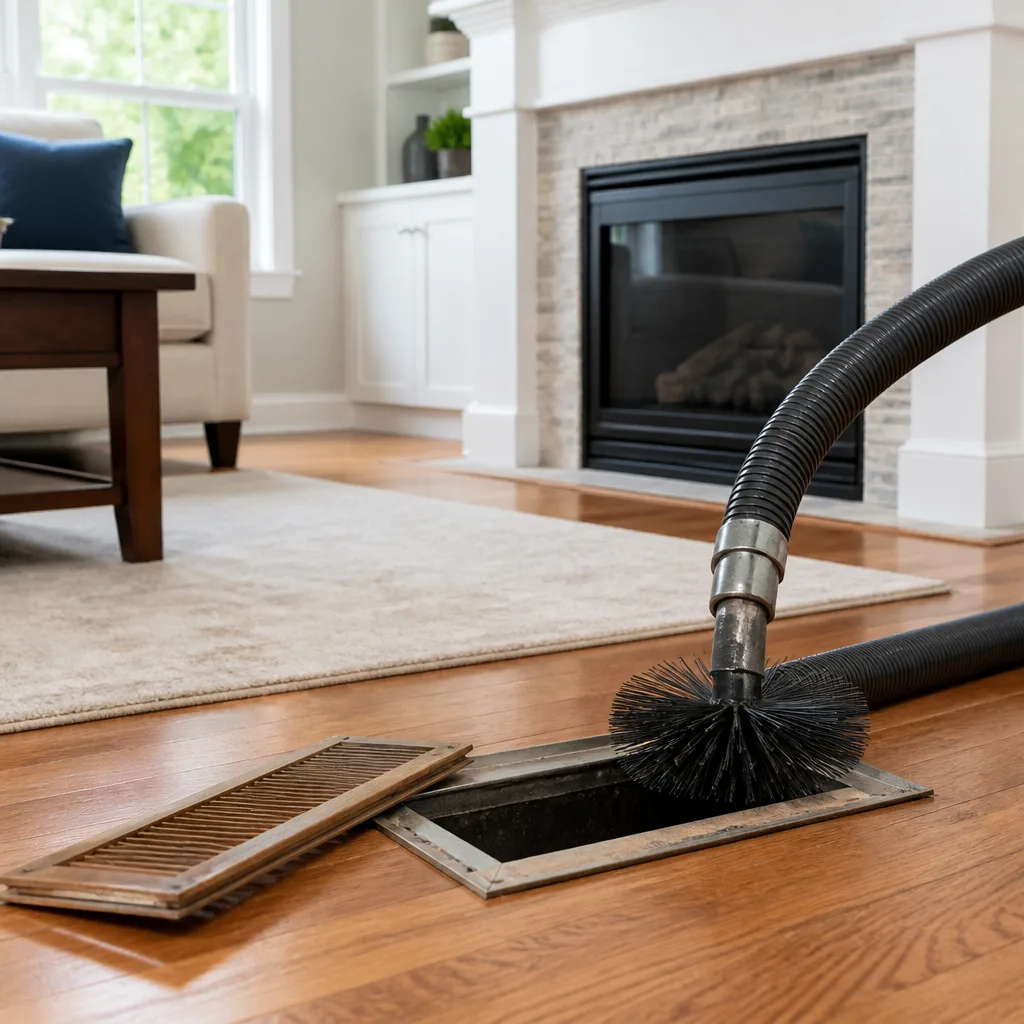 Whole-home duct cleaning
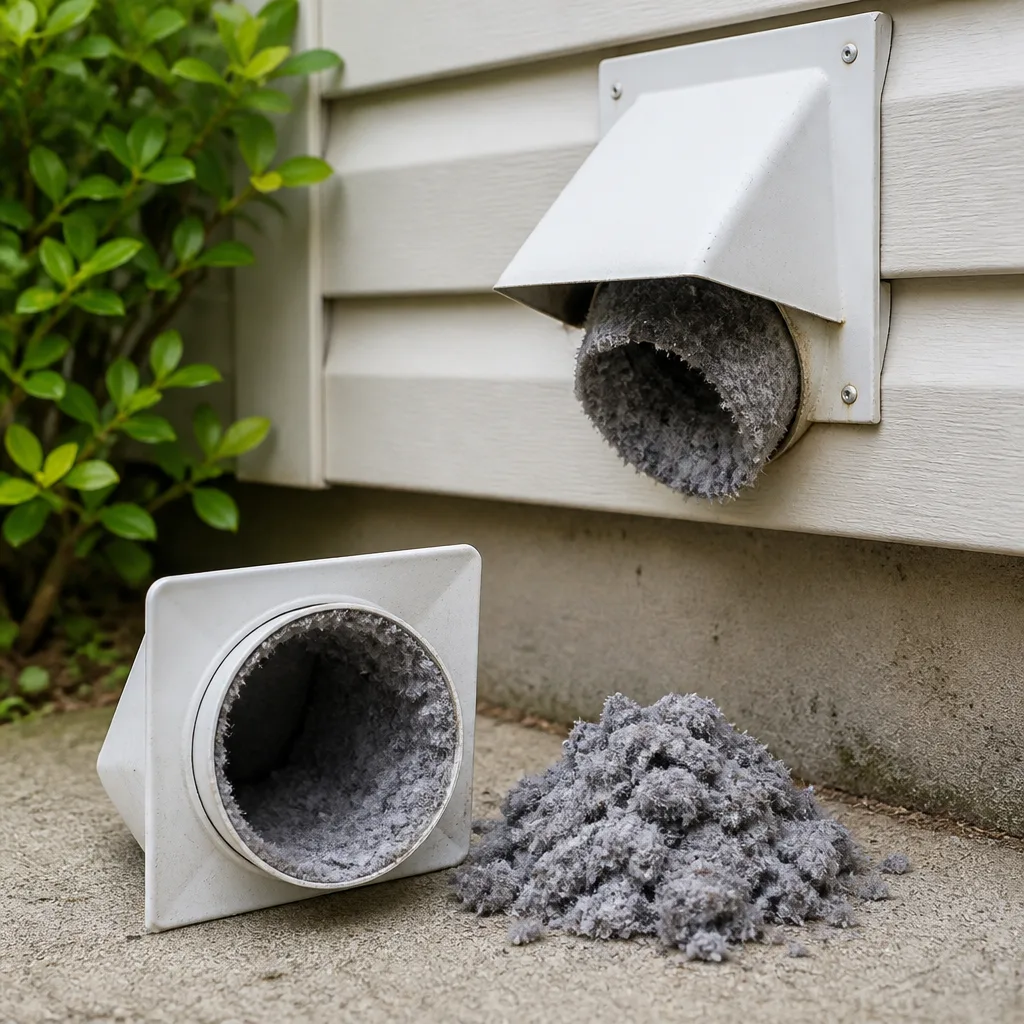 Dryer vent cleaning
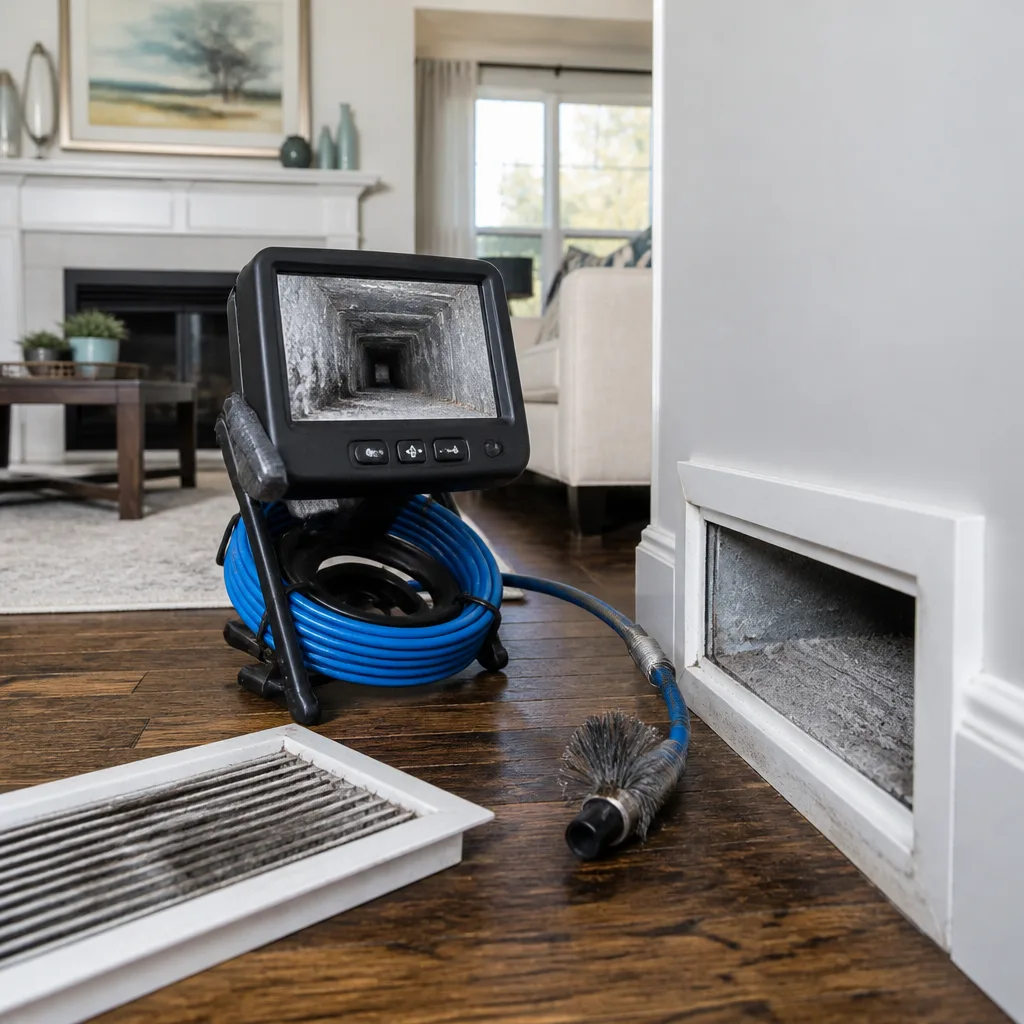 Camera inspection
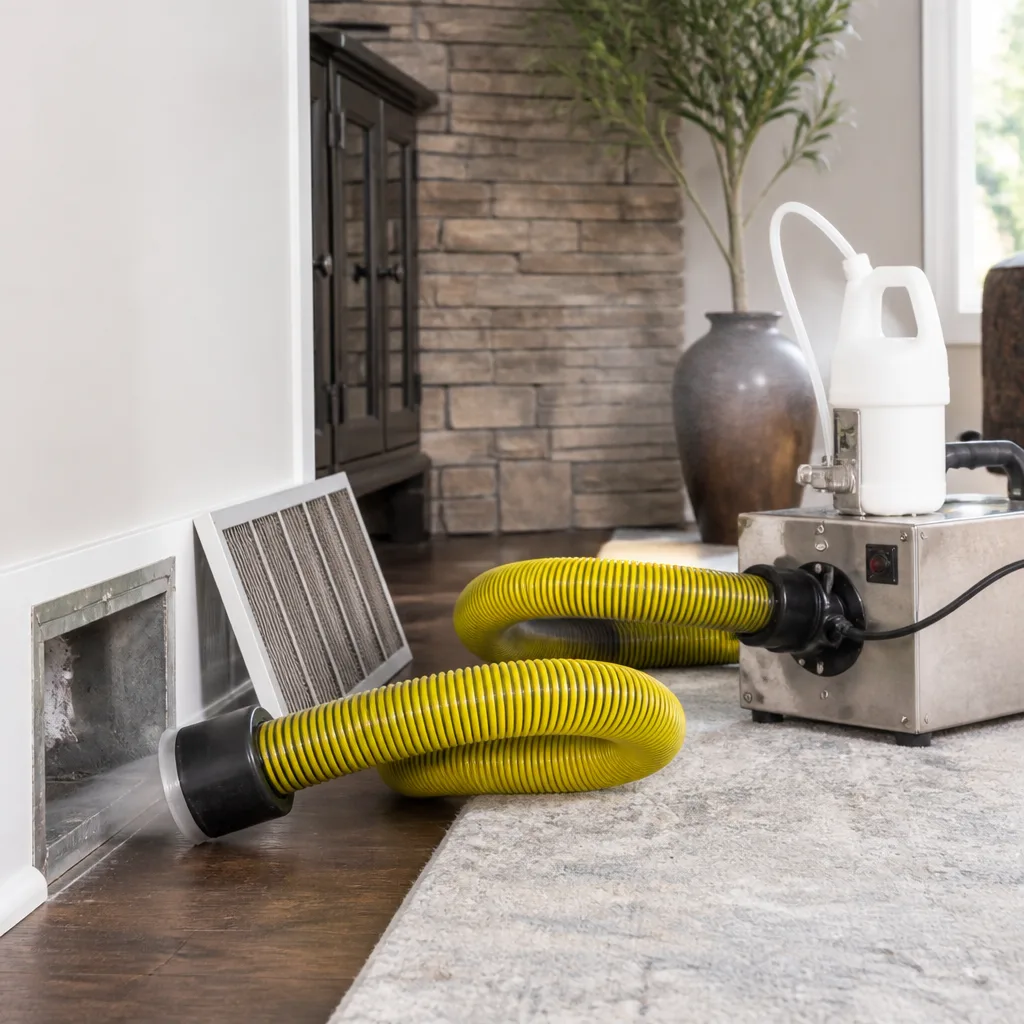 Sanitizing & deodorizing
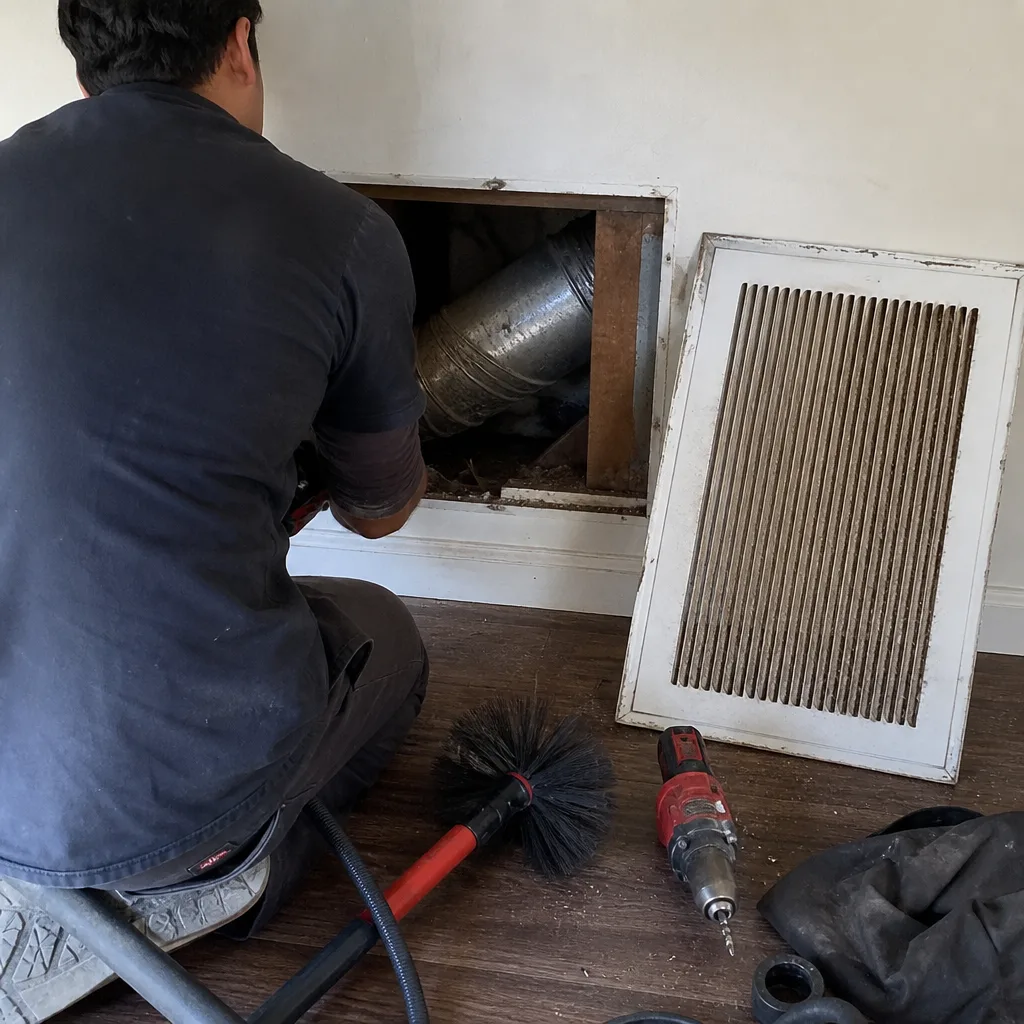
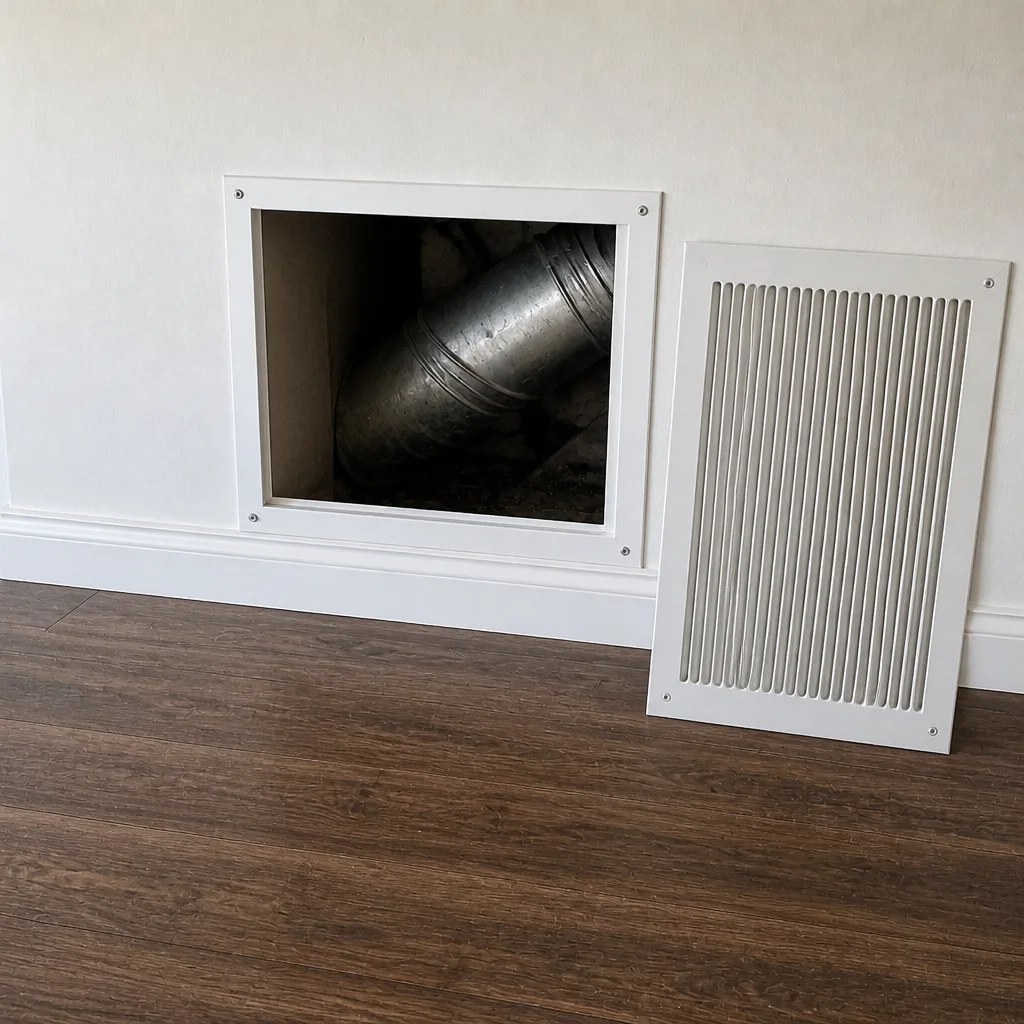
Whole-system duct and dryer vent check with before-and-after photos - you see exactly what came out of your vents
That "$99 whole-house special" is a bait ad - the real number appears once they are in your hallway, or the "clean" is a shop-vac at the register. We photograph the inside of your ducts before and after instead.
DIY vs Professional Air Duct Cleaning: The Buena Park Homeowner’s Decision Guide
A shop vac generates roughly 60 to 80 CFM of suction. Professional truck-mounted duct cleaning equipment generates 3,000 to 5,000 CFM. That gap isn’t a matter of degree. It’s the difference between pulling debris out of a 25-foot duct run and just agitating it. Most homeowners in Buena Park assume the DIY question comes down to effort versus cost. It actually comes down to physics. This guide explains what that CFM gap means inside your ductwork, which tasks you can legitimately handle yourself, and where a DIY attempt quietly makes the air in your home worse than it was before you started.
Quick Answer
For anything beyond wiping down vent covers and vacuuming the first few inches of a register, professional air duct cleaning is the right call for Buena Park homes. Consumer vacuums cannot generate the static pressure needed to pull debris through a full duct run, so a DIY attempt often loosens settled dust and blows it further into the system. The honest DIY scope is inspection and surface-level register maintenance. The honest professional scope is extraction, which requires equipment built for negative pressure, not household suction.
Styles & brands we work with
- Whole-home duct cleaning
- Dryer vent cleaning
- Camera inspection
- Sanitizing & deodorizing
Table of Contents
- The Physics Problem: Why CFM Decides the Outcome
- What Homeowners Can Legitimately Do Themselves
- When DIY Makes Contamination Worse
- Cost-Benefit Analysis: What a DIY Attempt Actually Saves
- The One Legitimate DIY Tool Worth Owning
- What Professional Equipment Does That a Shop Vac Cannot
- Common Mistakes to Avoid
- When to Call a Professional
The Physics Problem: Why CFM Decides the Outcome
Air duct cleaning is not scrubbing. It is extraction. The dust, skin cells, pet hair, and construction debris inside a duct system are not sitting in a convenient pile waiting to be wiped up. They are spread along the interior walls of long, enclosed channels that snake through attics, crawlspaces, and wall cavities. The only way to remove that material is to pull it out with moving air.
The metric that matters is CFM, cubic feet per minute. A household shop vac moves 60 to 80 CFM. That is enough to collect sawdust from a workbench or water from a small spill. It is not enough to maintain meaningful air velocity through a 25-foot duct run. By the time the air reaches the end of that run, it has slowed to the point where it can no longer carry particulate. The debris falls back onto the duct floor.
Professional duct cleaning systems built by Nikro and similar manufacturers move 3,000 CFM or more. They use high-powered negative air machines that connect directly to the duct system and create a vacuum strong enough to pull air through the entire run at extraction velocity. The dust does not just get loosened. It gets carried out.
There is also static pressure to consider. A duct system resists airflow. Every bend, transition, and register grille adds resistance. A consumer vacuum cannot overcome that resistance past a few feet. A professional system is designed to maintain negative pressure even through long runs and multiple branches. In Buena Park, where many homes have single-story layouts with ducts running through hot attics, those runs can stretch 30 feet or more. Physics does not bend for good intentions.
What Homeowners Can Legitimately Do Themselves
The honest DIY scope exists. It is just narrower than most online articles suggest. Here is what a Buena Park homeowner can reasonably handle without professional equipment:
- Register and grille cleaning. Unscrew the vent covers, wash them in warm soapy water, let them dry, and reinstall. This removes visible surface dust and improves airflow slightly. It does not clean the duct behind the register.
- First-six-inches vacuuming. With the register removed, you can reach a vacuum hose into the opening and collect loose debris within arm’s reach. Be honest about what this accomplishes: it cleans the accessible opening, not the system.
- Filter replacement. Change your HVAC filter on schedule. A clean filter reduces the amount of new particulate entering the system from the return side. This is the single most impactful habit a homeowner can maintain.
- Visual inspection of accessible sections. Use a flashlight to look into the duct from the register opening. You can see dust accumulation, rodent droppings, or signs of moisture. What you cannot see is the 20 feet of duct beyond your view.
- Dryer lint trap maintenance. Clean the lint screen after every load. This is a daily habit, not a project. It keeps the dryer running efficiently and reduces the load on the vent line. Full dryer vent cleaning of the pipe run requires equipment that reaches further than a homeowner’s arm.
These tasks are genuinely useful. They keep the visible parts of the system clean and slow down the rate of buildup in the parts you cannot see. What they do not do is replace professional extraction. They are maintenance, not remediation.
When DIY Makes Contamination Worse
There are specific scenarios where a DIY cleaning attempt actively leaves the system worse than it was before. Understanding these matters because the stakes are not just wasted time. They are air quality.
Mold or microbial growth. If any part of the duct interior shows dark staining, moisture damage, or a musty odor, do not vacuum it. A consumer vacuum does not have HEPA-level filtration. It will pull mold spores into the airflow and exhaust them back into the room. The contamination gets airborne. From there it spreads through the home. Professional systems handle this with sealed extraction and filtration designed to capture particulate, not redistribute it. Abatement Technologies equipment, which we stock and operate, is built for exactly this kind of elevated air-quality concern.
Rodent or pest debris. If inspection reveals droppings, nesting material, or dead pests inside a duct, the material must be removed under controlled conditions. Agitating it with a brush-on-a-drill or a shop vac stirs dried particulate into fine airborne particles. Without proper containment and respiratory protection, a homeowner is breathing whatever comes out. This is a contamination removal job, not a cleaning job.
Damaged or disconnected flex duct. Flex duct is common in California homes, including many in Buena Park. If the inner liner is torn, a homeowner’s vacuum will catch on the tear and worsen it. More importantly, a damaged duct may be disconnected or collapsing, which means cleaning it without repairing it first is pointless. Air you pull through a broken duct pulls from the attic, not the supply register. We repair ductwork before cleaning it, because cleaning a broken system accomplishes nothing.
Very long or inaccessible runs. The worst-case DIY outcome is the “loosen and leave” scenario. A homeowner gets a brush or a vacuum into the first section of duct, agitates the settled dust, and the tool cannot reach far enough to extract it. The dust becomes airborne, settles deeper into the system, and then re-enters living spaces over the following weeks. The home is dustier after the cleaning than before.
Cost-Benefit Analysis: What a DIY Attempt Actually Saves
The perceived savings of DIY duct cleaning come from comparing a $60 attachment kit against a professional estimate. The real calculation has more variables.
Here is the honest breakdown for a typical Buena Park single-family home:
- DIY register cleaning and first-six-inches vacuuming: Costs almost nothing in materials. Takes an afternoon. Provides a modest cosmetic improvement. No extraction value past the accessible opening.
- DIY inspection camera: A basic endoscope camera costs $30 to $80. This is a legitimate tool for assessment. It lets you see what is in the duct without guessing. It does not clean anything.
- Professional whole-system cleaning: The cost is set per job by written estimate, and the estimate is free. The work includes extraction of the full duct run, not just the visible portion. Equipment on our trucks includes Rotobrush and Nikro contact-cleaning systems that physically agitate the duct interior while negative air pulls the debris out.
- DIY damage cost: If a homeowner tears a flex duct liner, pulls a register boot loose, or agitates mold spores into the living space, the repair or remediation cost exceeds the original cleaning cost. This is the hidden variable in every DIY calculation.
The fair comparison is not $60 versus a professional invoice. It is $60 plus the risk of a torn liner and airborne contamination versus one flat price per system agreed before the work starts. The written estimate sets the final price. There is no bait-and-switch, no per-vent upsell, no price that changes once the van is in the driveway. That transparency matters in an industry where low-bid coupons are sometimes a mechanism for inflating the invoice later.
The One Legitimate DIY Tool Worth Owning
If you are going to buy one piece of equipment for duct-related DIY work, buy an inspection camera. Not a cleaning kit. A camera.
An endoscope or borescope camera with a semi-rigid cable costs between $30 and $80 and connects to a smartphone. It lets you snake the lens into a register opening and see the actual condition of the duct interior. You can identify dust accumulation, debris, moisture staining, pest activity, and damaged sections before spending any money on cleaning.
This is assessment, not cleaning. It answers the question every cautious homeowner should ask first: what is actually in there? If the camera shows a light dust film on the first few feet, your register maintenance may be adequate for now. If it shows heavy accumulation, rodent droppings, or mold staining, you now have a clear reason to call a professional. You also have visual evidence that helps you evaluate estimates honestly.
In our experience, the homeowners who are happiest with professional cleaning are the ones who looked first. They know why we are there. They understand what the equipment is doing. The camera never cleans anything, but it removes the uncertainty that makes duct cleaning feel like a gamble.
What Professional Equipment Does That a Shop Vac Cannot
The difference between consumer gear and professional gear is not marketing. It is mechanical capacity. Here is what the equipment on our trucks does that a portable unit cannot.
Rotobrush and Nikro contact cleaning. These are purpose-built duct cleaning systems. A rotating brush head travels down the duct run and physically agitates the debris stuck to the interior walls. Simultaneously, a high-power vacuum unit connected to the system extracts the loosened material. The brush contacts the surface. The negative air removes what the brush frees. This is contact-based cleaning, not blow-and-hope.
Abatement Technologies equipment. This is a different category entirely. Abatement builds containment and air-filtration equipment used in restoration and contamination work. When a duct system has mold staining, pest debris, or post-construction dust, the job requires more than a rotating brush. It requires sealed extraction and filtration that keeps the contamination from spreading through the home. Stocking and operating this equipment signals a capability that goes beyond basic dust removal.
Filtration integration with Honeywell and Aprilaire. A thorough cleaning should end with a conversation about what happens next. If the home runs a Honeywell or Aprilaire filtration system, the ductwork and the filter need to work together. We work with those systems regularly and can speak to how a cleaned duct system performs with high-efficiency filtration. The cleaning is one part of the air-quality picture. The filtration is the other.
Guardsman finishing applications. After extraction, some systems benefit from a protective or sealant application. Guardsman products are used where a sealing step adds value, particularly on accessible metal duct sections. This is finishing work, not a required upsell. It is an option that makes sense in specific situations.
None of this equipment has a consumer equivalent. A shop vac hose with a brush attachment looks like the same idea. It is not. The difference is measurable in CFM, in reach, and in what actually leaves the duct.
Common Mistakes to Avoid
- Pushing dust with a leaf blower. Some DIY guides suggest blowing out ducts with a leaf blower from the register side. This pressurizes the system and forces dust out of every gap, seam, and register in the house. It redistributes contamination. It does not extract it.
- Using a drill-mounted brush without negative pressure. Brushing loosens debris. Without simultaneous high-volume extraction, the loosened debris stays in the duct and becomes airborne later. Agitation plus extraction must happen together.
- Vacuuming mold without HEPA filtration. A consumer vacuum exhausts what it picks up. Mold spores pass through the filter and into the room. This changes a localized problem into a whole-home problem.
- Ignoring the return side. Homeowners focus on supply registers because they are visible. The return side carries the air into the system and often holds more debris. A professional cleaning addresses both sides. A DIY attempt that only touches supply registers does half a job.
- Spraying cleaners into the duct. Household cleaning sprays inside a duct leave residue that attracts more dust. Some also leave scent that masks, rather than removes, the source of an odor. Chemical application inside ductwork should be approached carefully and only when warranted.
- Assuming a clean filter means clean ducts. A filter protects the equipment and the air passing through it. It does not clean the ductwork downstream or upstream. A clean filter means the system is filtering effectively. It says nothing about the condition of the duct interior.
- Waiting until the problem is visible. By the time dust is visibly blowing from registers or the home has a persistent musty odor, the system needs more than a routine cleaning. Inspection and maintenance work best when they happen before the symptoms become obvious.
When to Call a Professional
Call a professional when your inspection camera or flashlight reveals heavy dust accumulation beyond the first few feet, rodent droppings or pest debris, mold staining, moisture in the duct, or damaged flex duct. Call when you have allergy symptoms that track with HVAC operation, when you have moved into a home with unknown duct history, or when a renovation project has filled the system with construction dust. Call when you have not had the ducts inspected in years and the registers are visibly coated. Duct Cleaning Buena Park offers free estimates in Buena Park. The estimate is based on a written scope of work, and the price is set before any equipment rolls. Call (855) 684-4139. We answer 24/7. Fast dispatch from 7am to 7pm, Sunday through Friday.
See the difference
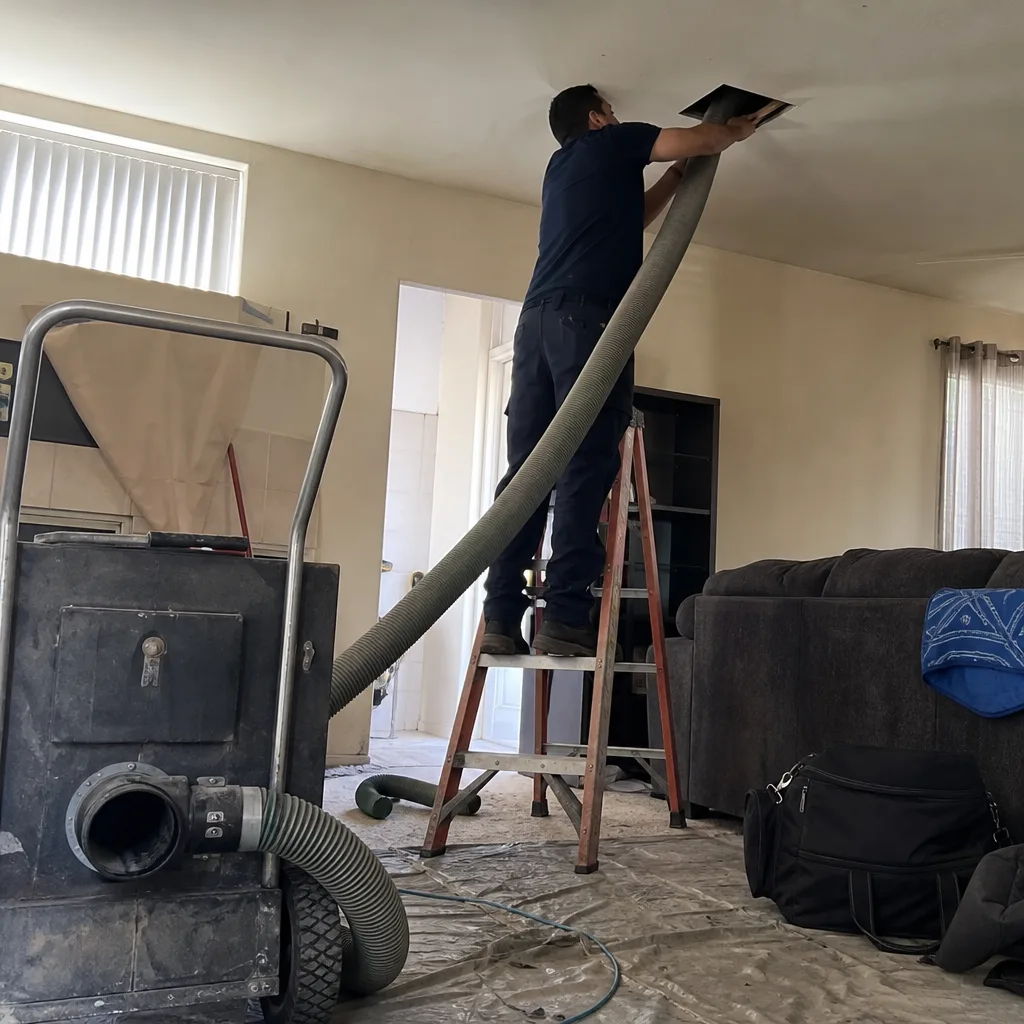 Before
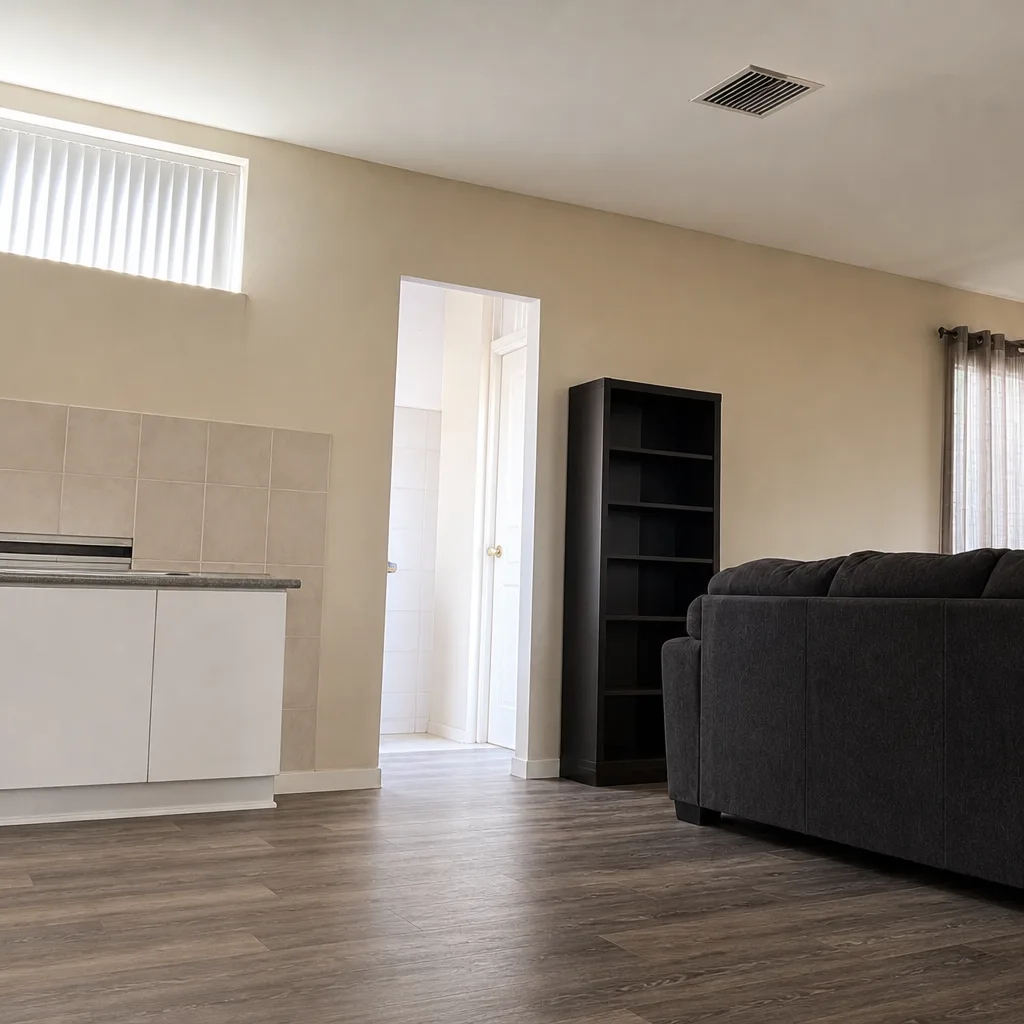 After
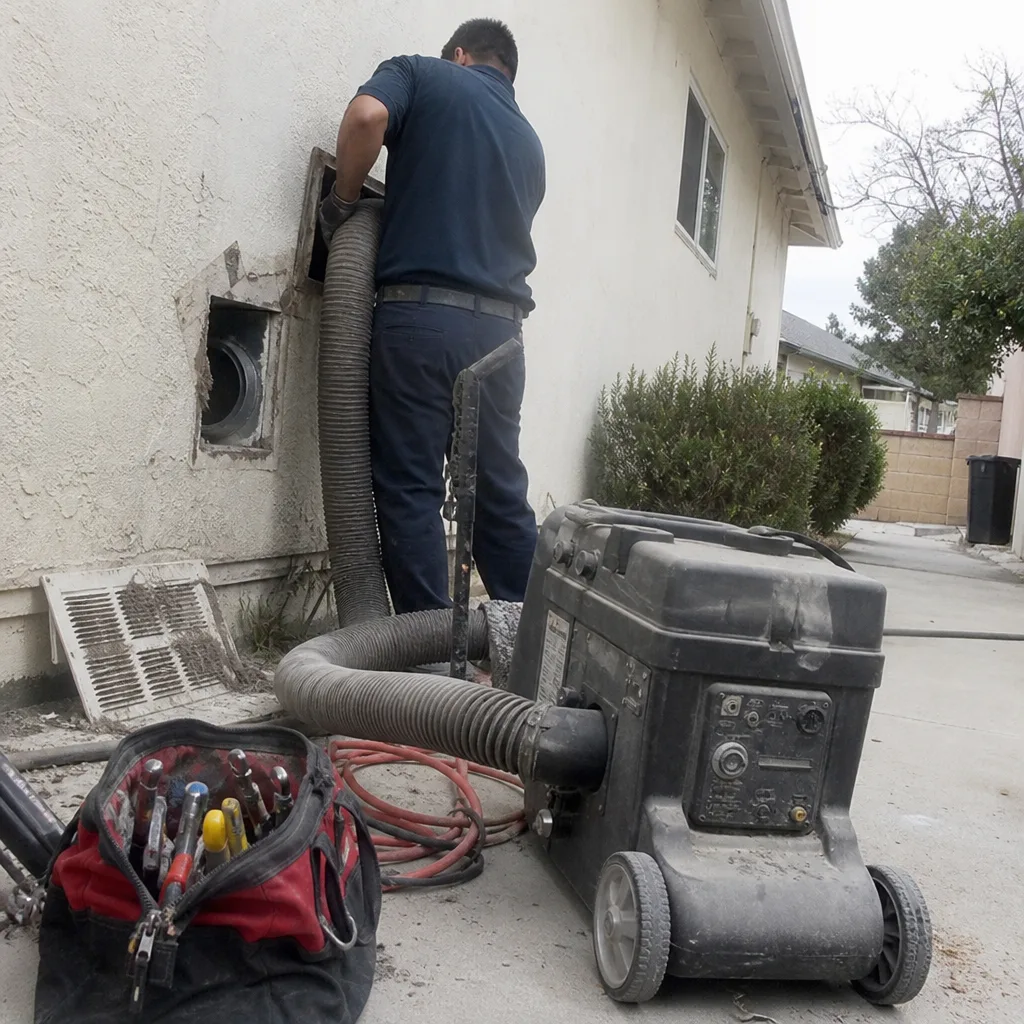 Before
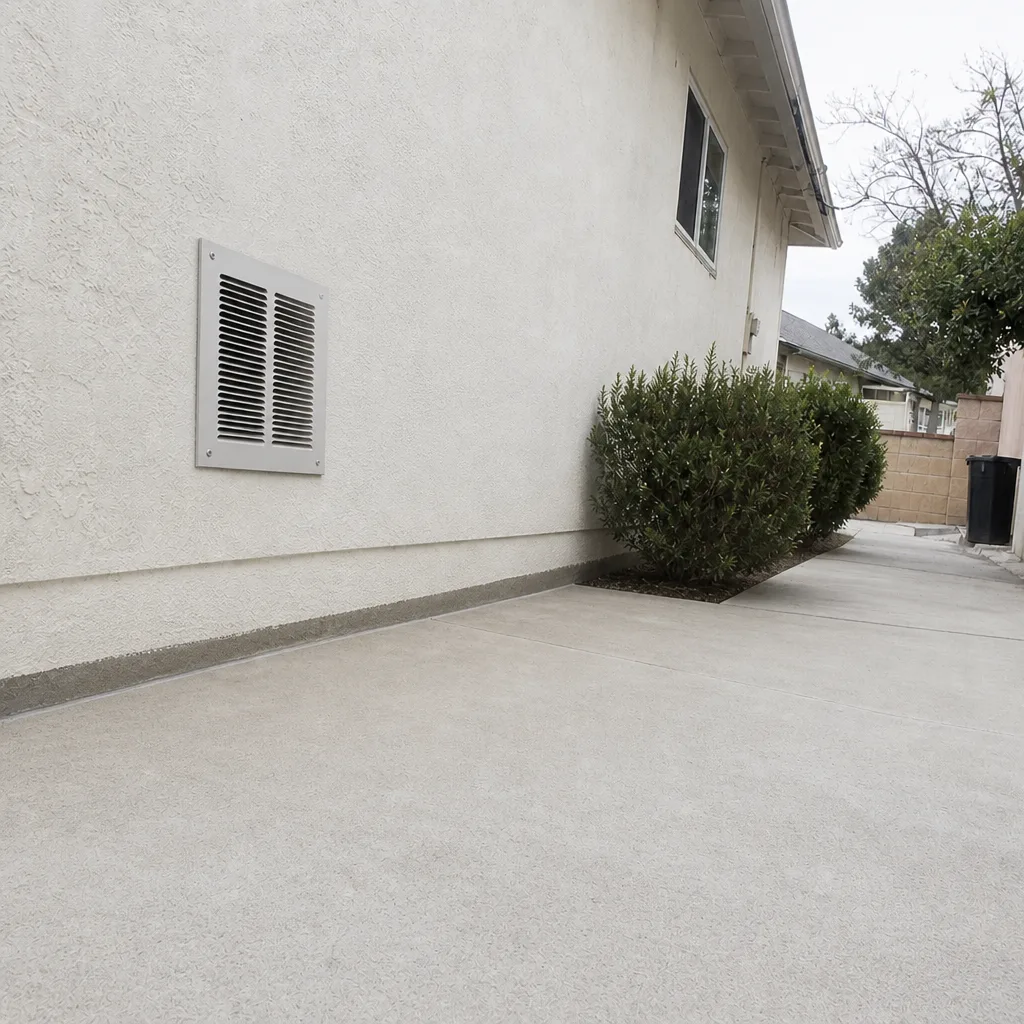 After
 Before
 After
Frequently Asked Questions
Professional air duct cleaning in Buena Park is priced per job by written estimate, not by a per-vent rate. The estimate is free and the price is set before work begins, with the system size, duct layout, and condition determining the scope. Call (855) 684-4139 for an exact quote for your home.
You can clean the first few inches of accessible duct from a register opening, but a shop vac cannot generate enough CFM to extract debris from a full duct run. The vacuum loosens dust near the opening and leaves the rest of the system untouched, or worse, agitates settled material that then blows further into the home.
Remove a register and look in with a flashlight or inspection camera. Visible dust accumulation, debris, droppings, or staining beyond the first few inches indicates the system needs attention. A filter that clogs quickly, visible dust blowing from registers, or musty odor when the system runs are also indicators.
The difference is simultaneous agitation and extraction. Professional systems like Rotobrush and Nikro units run a rotating contact brush down the duct while high-power negative air pulls the loosened debris out of the system. A DIY brush loosens debris without extracting it, which redistributes contamination rather than removing it.
Buena Park’s dry, mild climate means ducts are less prone to moisture problems than coastal or humid regions, but the same climate produces fine dust that settles into systems over time. Homes near the 5 and 91 freeways tend to accumulate particulate faster. Regular inspection tells you whether cleaning is needed.
Inspection every two to three years is a reasonable baseline for most Buena Park homes, with cleaning scheduled when the inspection shows accumulation. Homes with pets, recent construction, allergy-sensitive occupants, or freeway-adjacent locations may need attention more often.
The Bottom Line
The DIY versus professional question is not about willingness to work. It is about whether the tool can do the job. A shop vac cannot move enough air to extract debris from a full duct run. A brush without negative pressure loosens contamination and leaves it airborne. The honest homeowner’s toolkit includes register cleaning, filter changes, and an inspection camera for assessment. The actual cleaning belongs to equipment built for extraction: Rotobrush, Nikro, and Abatement Technologies systems on a professional truck. For Buena Park homeowners who want to know the work was actually done, one flat price per system agreed before work starts is the bottom line. Not a coupon. Not a per-vent upsell. An honest scope at an honest price.
Written by the team at Duct Cleaning Buena Park, serving Buena Park since 2014.