
Last updated November 4, 2026
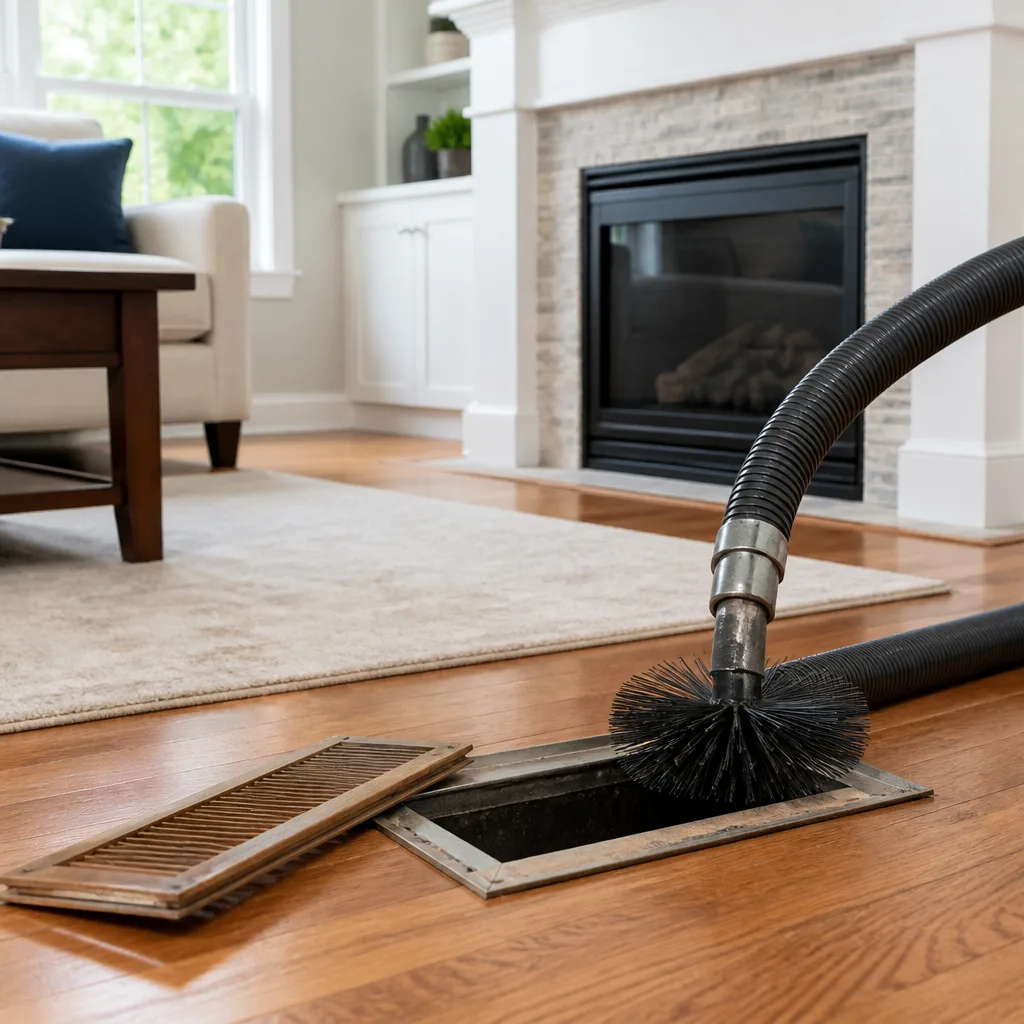 Whole-home duct cleaning
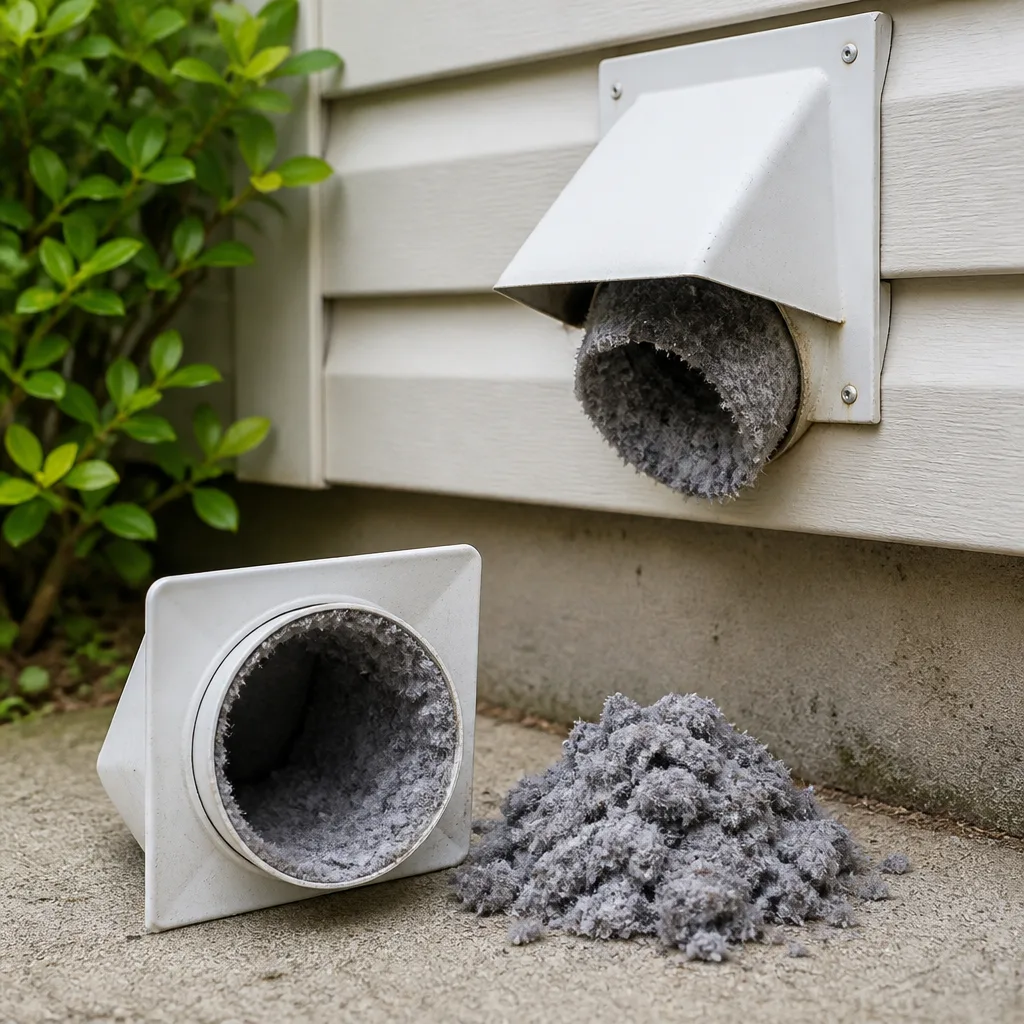 Dryer vent cleaning
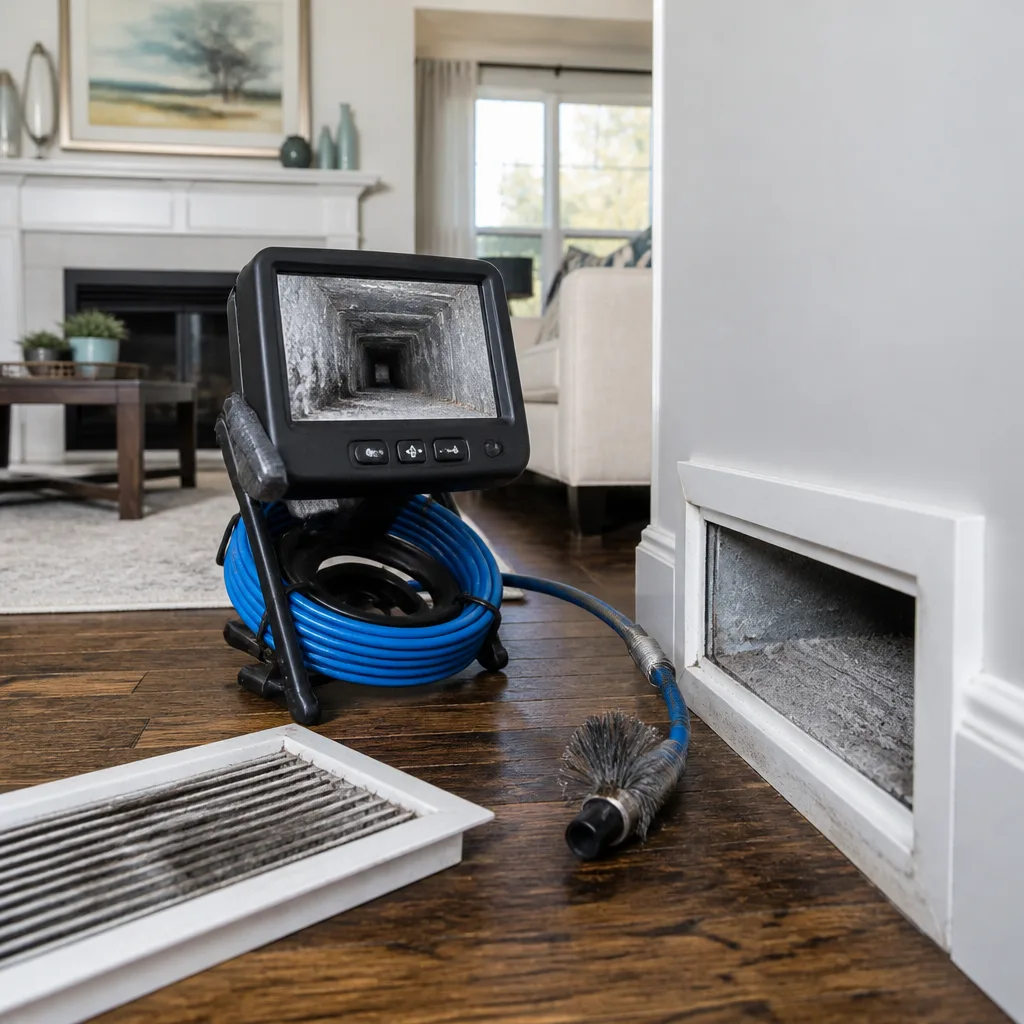 Camera inspection
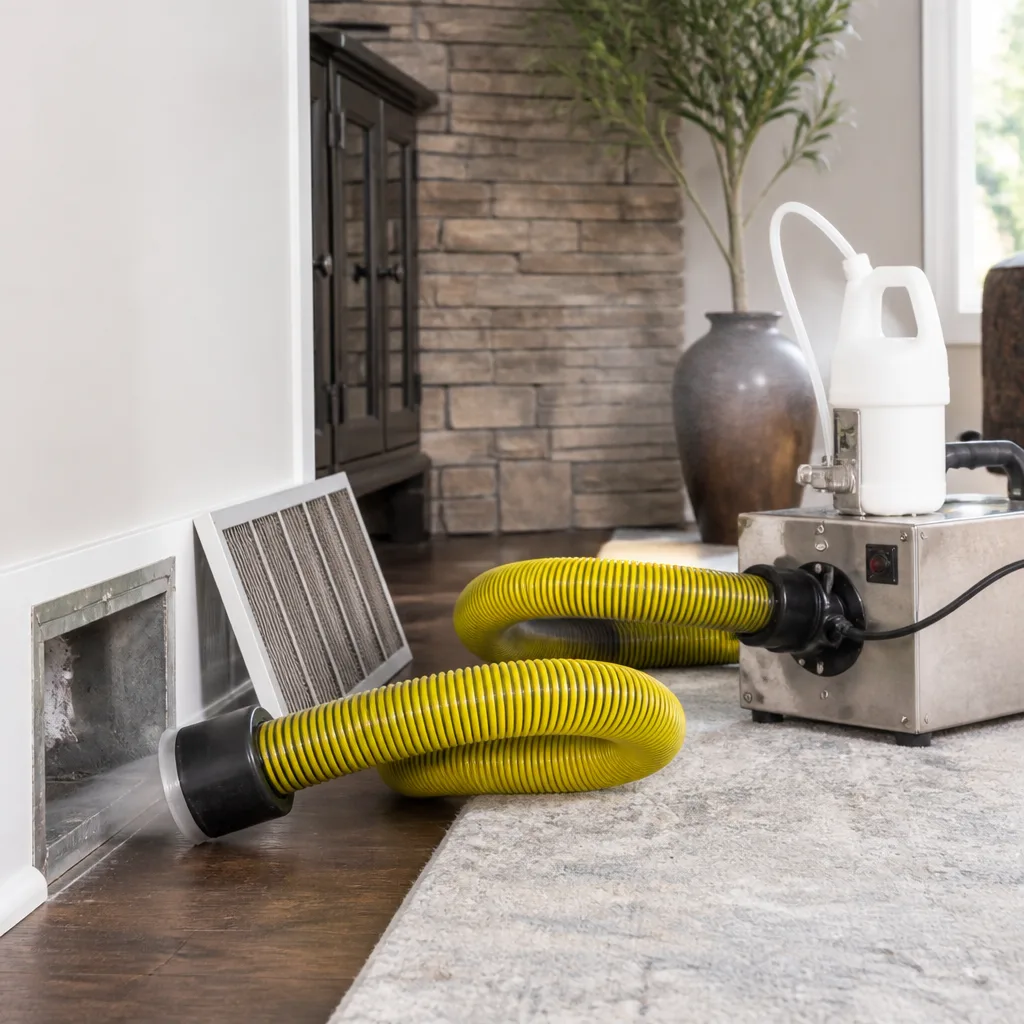 Sanitizing & deodorizing
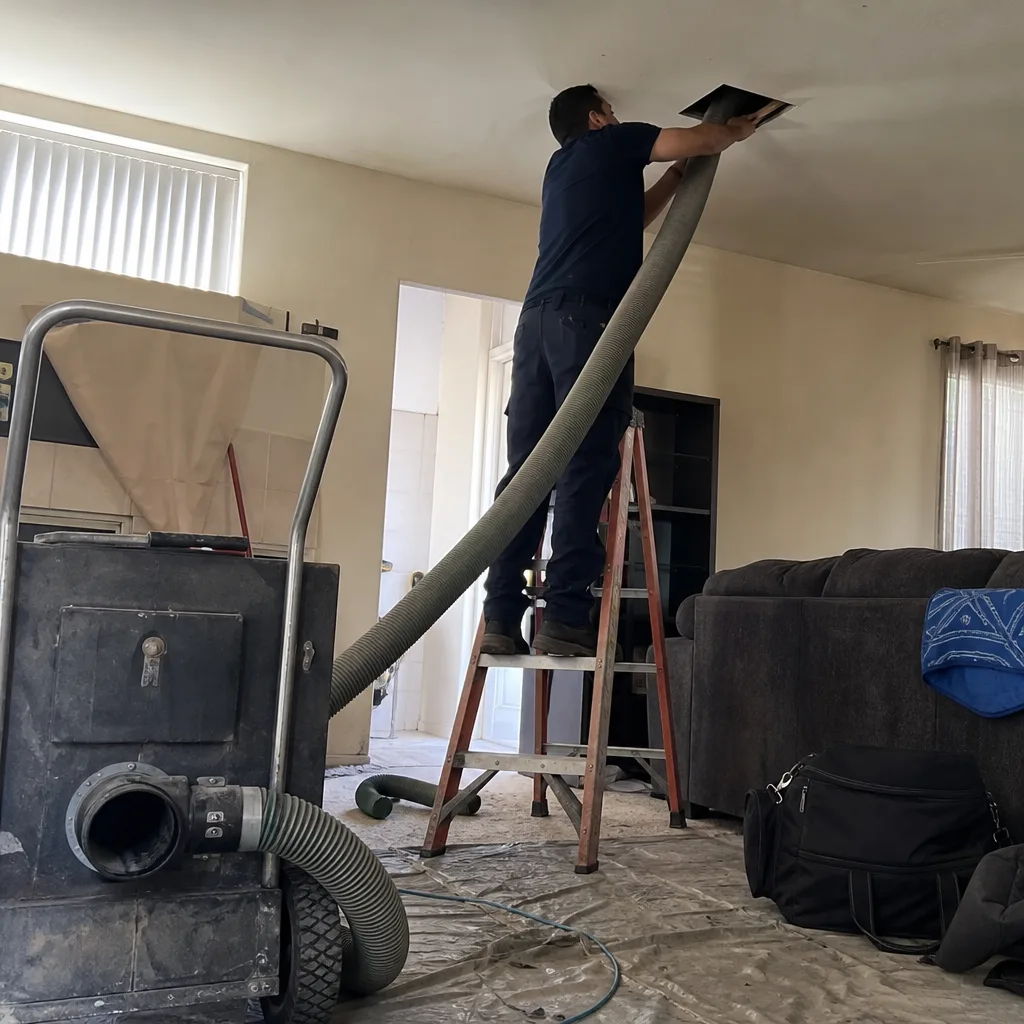
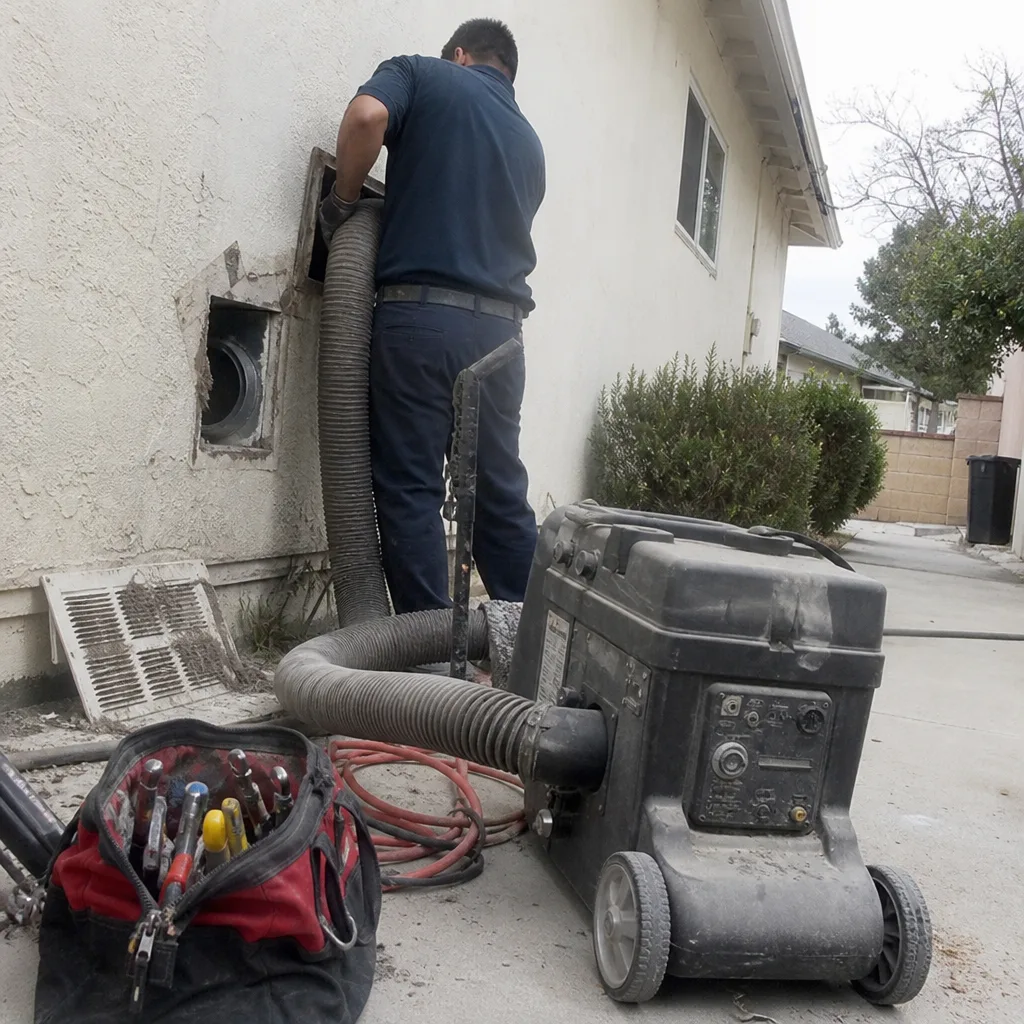
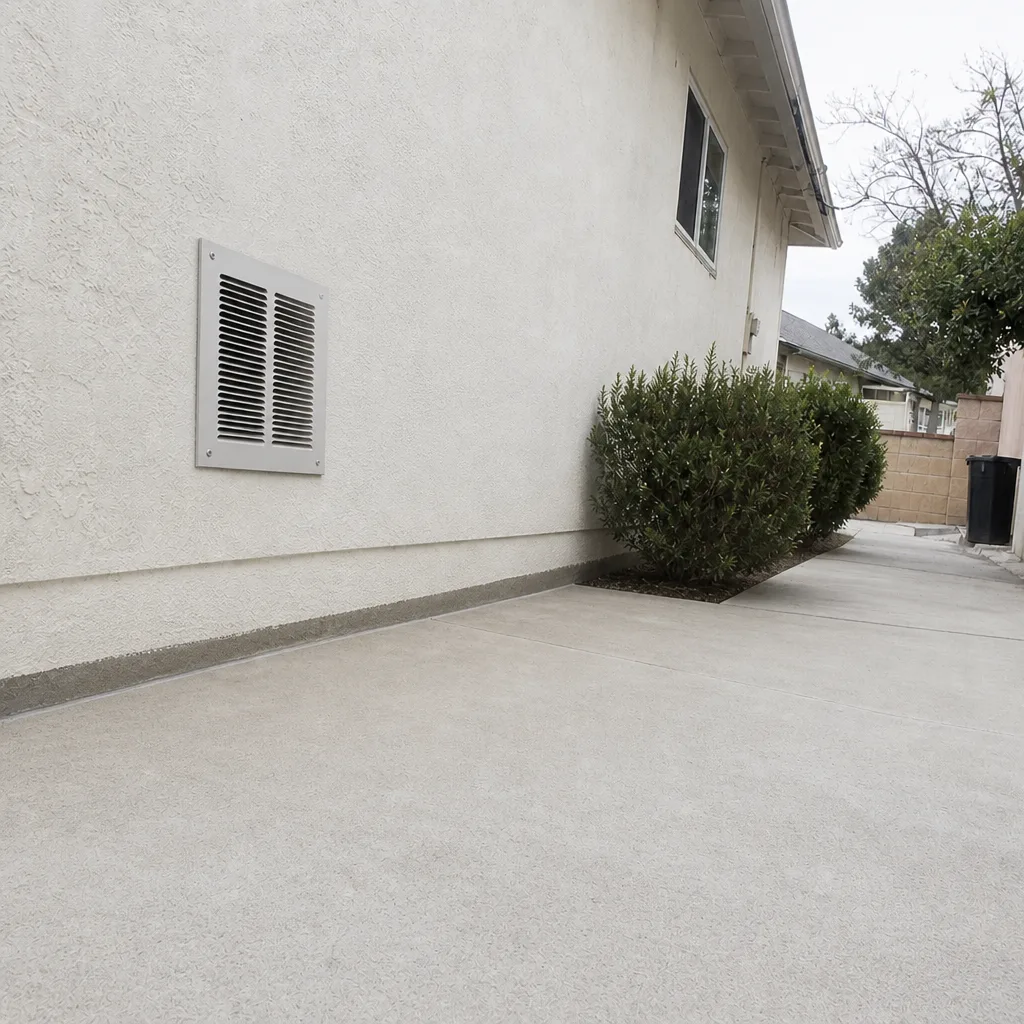
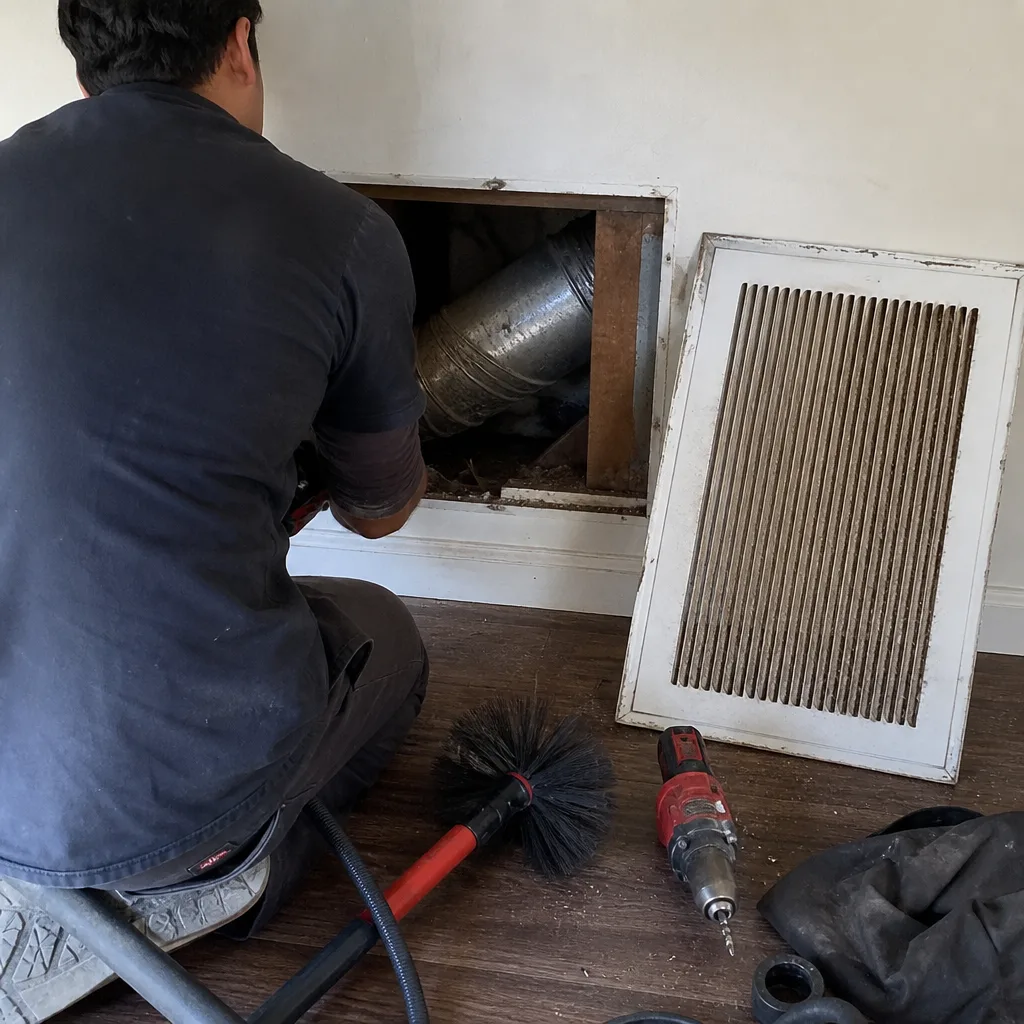
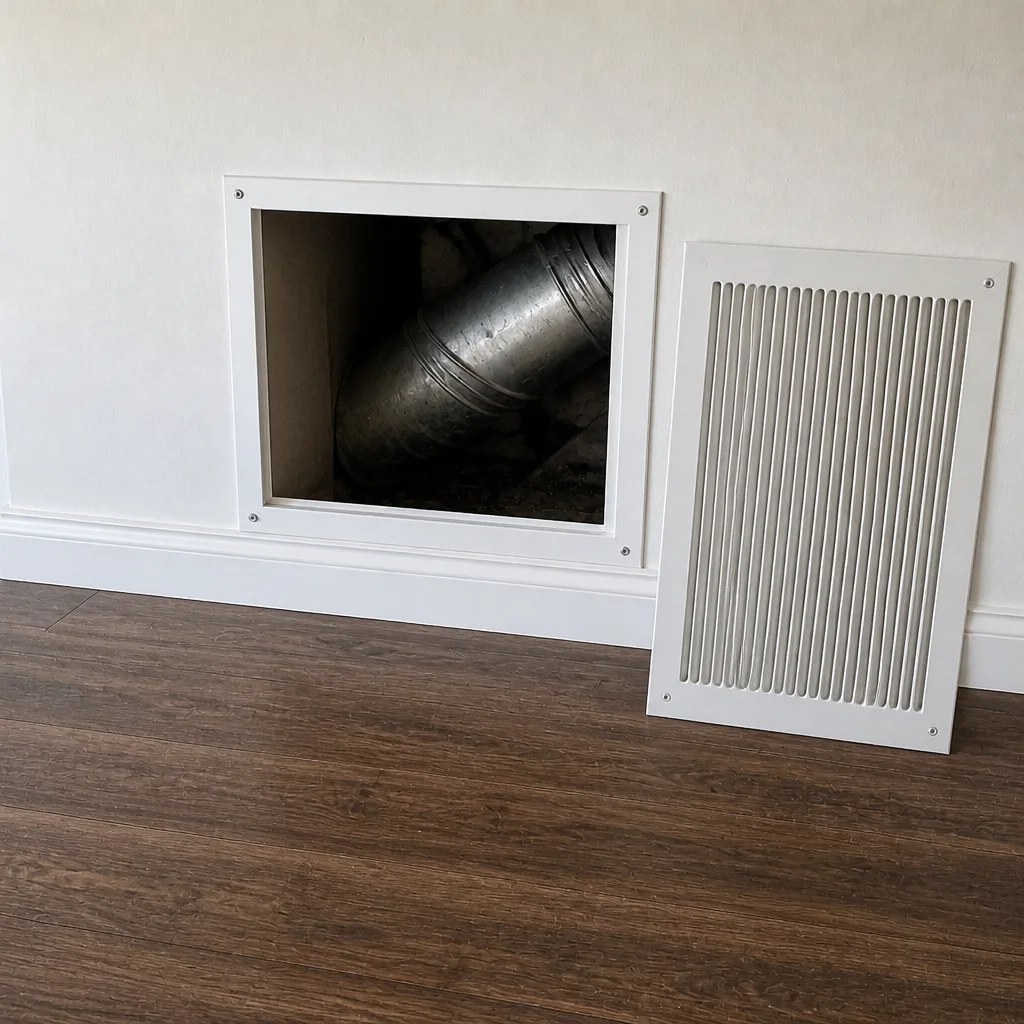
Whole-system duct and dryer vent check with before-and-after photos - you see exactly what came out of your vents
That "$99 whole-house special" is a bait ad - the real number appears once they are in your hallway, or the "clean" is a shop-vac at the register. We photograph the inside of your ducts before and after instead.
Air Duct Cleaning Troubleshooting in Buena Park: Common Problems and How to Fix Them
If your ducts were professionally cleaned six months ago and you’re still wiping dust off your vent covers, the cleaning didn’t fail. Something else inside your system is still generating debris, and knowing which problem you have changes everything about how you fix it. Most homeowners in Buena Park call us assuming their ducts are dirty again when the real issue is a disconnected trunk line, a torn filter slot, or a balancing damper that was never adjusted. This guide teaches you how to read your system’s distress signals before you spend money on the wrong fix.
Quick Answer
Air duct cleaning problems in Buena Park typically fall into three categories: debris still being generated by a mechanical failure, debris that was never actually extracted (just displaced by under-powered equipment), or airflow issues caused by damaged ductwork rather than dust buildup. Diagnosing which problem you have means checking airflow patterns, inspecting accessible duct sections, and understanding what your last cleaning actually did. The fix ranges from targeted re-cleaning with professional-grade extraction equipment to duct repair or sealing, not another pass with a brush.
Styles & brands we work with
- Whole-home duct cleaning
- Dryer vent cleaning
- Camera inspection
- Sanitizing & deodorizing
Table of Contents
- Dirty Ducts vs. Leaking Ducts vs. Filtration Problems: Three Causes of “Dusty Air”
- What a Persistent Musty Smell After Cleaning Actually Tells You
- Uneven Room Airflow: Duct Restriction or Balancing Damper?
- Why “Just Cleaned” Ducts Can Still Test Dirty: Displacement vs. Extraction
- When You Need Repair, Not Re-Cleaning: Collapsed Flex, Failed Seams, Disconnected Lines
- What You Can Check Yourself (and What You Shouldn’t Touch)
- Buena Park-Specific Factors: Attic Heat, Construction Dust, and Home Age
- Common Mistakes to Avoid
- When to Call a Professional
- Frequently Asked Questions
Dirty Ducts vs. Leaking Ducts vs. Filtration Problems: Three Causes of “Dusty Air”
The most useful skill a homeowner can develop is distinguishing between three problems that all present as “my air feels dusty.” They look identical but require completely different fixes. Get this wrong and you’ll pay for cleaning that doesn’t solve anything.
A dirty duct problem means the interior surfaces of your ductwork actually carry accumulated debris: dust, pet hair, construction particles, sometimes remnants of a past pest issue. The fix is straightforward: professional air duct cleaning with equipment that physically contacts and extracts the debris, not just stirs it. You’ll see visible buildup on vent covers within weeks of cleaning if this is the root cause, because the source was never fully removed.
A duct leakage problem is completely different. Unsealed seams, disconnected sections, or gaps around register boxes pull unfiltered attic air (or crawlspace air, depending on your home’s design) directly into your living space. In Buena Park, attics get extremely hot in summer and collect fine dust year-round, so a leak means a constant supply of new particulate. No amount of cleaning fixes this. The ductwork must be sealed or the failing section replaced. This is why we carry repair capability alongside cleaning: the two problems often coexist and require a single diagnosis.
A filtration problem means the duct system is reasonably clean but the air moving through it isn’t being filtered properly. A torn filter slot, an incorrectly sized filter, or a bypass gap around the filter frame lets unfiltered air join the airstream downstream. We work with Honeywell and Aprilaire filtration systems, and the first thing we check when a homeowner says “the air still feels dusty” is whether the filter is actually doing its job. A high-efficiency filter in a loose slot is no better than a cheap fiberglass one.
Step one in troubleshooting: figure out which of these three you’re dealing with before calling anyone.
What a Persistent Musty Smell After Cleaning Actually Tells You
Musty odor that returns within days or weeks of a duct cleaning is a diagnostic clue, not a failure of the cleaning itself. In our experience, it points to one of two mechanical conditions.
The first is microbial growth on the evaporator coil or inside the air handler cabinet. Duct cleaning addresses the ductwork. It does not address the coil, the drain pan, or the area where condensation sits during cooling season. In Buena Park, air conditioning runs heavily from June through October, and the coil stays wet for months. If organic dust has accumulated on the coil, that moisture creates exactly the environment where odor-causing growth thrives. The smell gets pulled into the airstream every time the blower runs, making it seem like the ducts are the source when they aren’t.
The second is residual debris trapped in inaccessible flex duct bends. Flex duct has spiral wire reinforcement creating corrugations that collect material, particularly in tight bends or sags where the duct loses its shape. If the previous cleaning used low-power equipment or skipped certain supply runs (common with short-duration, low-bid cleanings), that trapped material stays put and keeps off-gassing. Proper extraction with professional-grade equipment like Rotobrush or Nikro systems, which use rotating brush contact paired with strong negative air, is the difference here. A vacuum truck that pulls air through the register but never mechanically agitates the duct walls leaves the worst material behind.
The question to ask before re-cleaning: was the evaporator coil inspected and was every supply run actually contacted? If both answers are no, the original job wasn’t complete.
Uneven Room Airflow: Duct Restriction or Balancing Damper?
One bedroom stays comfortable while another never reaches the thermostat setting, and the temptation is to assume “blocked duct.” Sometimes that’s right. Often it isn’t, and knowing the difference saves you from a cleaning that won’t change anything.
A duct restriction is physical: collapsed flex duct, a disconnected section, a crushed trunk line, or an accumulation of debris severe enough to narrow the passage. You’ll typically notice the problem started suddenly (after someone worked in the attic, for example) or has worsened progressively. This is a repair issue, not a cleaning issue, though cleaning may be needed after the repair to remove what the damage introduced.
A balancing damper issue is mechanical adjustment. Many Buena Park homes have dampers inside the duct system: metal plates on a pivot that a technician can rotate to direct more or less air to specific branches. Over time, or after a prior service visit, these dampers can end up in the wrong position. One branch gets starved while another gets excess airflow. The fix is adjustment, not cleaning. A technician opens the damper that’s throttling the under-served room and potentially throttles back the over-served one.
Here’s how to narrow it down yourself. Walk the house and compare rooms. If the weak room has a return register, check whether air actually pulls toward it when the system runs. If the return is working but supply remains weak, the supply side is restricted or dampened. Next, remove the supply register (just the cover, nothing structural) and look inside with a flashlight. You may see a damper plate, visible debris, or a disconnected section. What you see determines the next call. If the duct interior is visibly clean and the register box connects properly, you’re probably dealing with a damper adjustment, which a qualified technician can address during a service visit.
Why “Just Cleaned” Ducts Can Still Test Dirty: Displacement vs. Extraction
Not all duct cleaning is the same process, and the difference matters enormously for Buena Park homeowners who paid for a service and saw no improvement.
Debris displacement happens when equipment moves air through the duct system but doesn’t physically remove material from the duct walls. A portable shop-vac connected to a register, or a truck-mounted vacuum running without an agitation device, will pull some loose material but leave the adhered layer intact. Picture knocking dust off a shelf with a leaf blower: the room looks better for a moment, but the dust settles elsewhere. In a duct system, that “elsewhere” can be deeper in the trunk line, around bends, or simply re-deposited on the same surfaces once the air movement stops.
Debris extraction requires two things working together: mechanical agitation of the duct walls and continuous negative air pressure pulling the dislodged material out of the system entirely. This is why we use Rotobrush and Nikro equipment on every job. These are purpose-built systems where a rotating brush head contacts the duct surface while the vacuum captures the released debris at the point of contact. The material leaves the house, not just the immediate area around the register. This is also what restoration contractors use when they handle post-construction or contamination scenarios.
If your ducts were cleaned with displacement-style equipment, a post-cleaning test can absolutely still show elevated particulate. The duct walls never got clean; they got rearranged. The solution isn’t “clean more often.” It’s clean once, correctly, with equipment that extracts rather than relocates.
When You Need Repair, Not Re-Cleaning: Collapsed Flex, Failed Seams, Disconnected Lines
Some findings during troubleshooting mean the duct system has structural problems that no cleaning process can address. Recognizing these before you schedule service puts you in control of the conversation.
Collapsed flex duct happens when the inner liner separates from the insulation or the spiral wire gets crushed. The duct kinks, airflow drops dramatically, and the system works harder to push air through a passage that’s mostly closed. You can’t clean this back into shape. The section needs replacement. We regularly see this in Buena Park attics where stored items have been placed on top of flex runs, or where original installation left excessive length bundled rather than properly supported.
Failed duct board seams occur when the edges of fiberglass duct board panels separate. Duct board was common in older Buena Park construction, and after years of thermal cycling, the tape and mastic at the joints give way. Air escapes into the attic, and attic air gets pulled in. The fix is re-sealing with proper mastic and tape, or replacing the failing section if the board itself has degraded. Our team handles Duct Cleaning Buena Park calls that turn out to be seam failures more often than you’d expect, because the presenting symptom is usually “dusty air” or “rooms won’t cool,” not “I have a hole in my ductwork.”
Disconnected trunk lines are the most severe. A supply branch separates entirely from the main trunk, meaning a portion of conditioned air dumps into the attic while the room it served gets nothing. The system runs longer to satisfy the thermostat, and the homeowner pays to heat or cool attic space. This requires reconnection and securing, possibly with new collars or supports. After any structural repair, the system should be inspected for debris introduced during the failure. That’s where our combined cleaning and repair capability matters: one company assesses the damage, fixes it, and cleans up the aftermath, with no need to call a second contractor for the ductwork itself.
What You Can Check Yourself (and What You Shouldn’t Touch)
You can learn a lot about your duct system without specialized equipment, and a little self-diagnosis before you call anyone helps you ask the right questions and avoid paying for the wrong service.
- Pull a supply register and shine a light inside. You’re looking for visible debris, signs of water staining, disconnected sections, or a damper plate. This tells you whether you’re dealing with accumulation, leakage, or balancing.
- Check the filter slot. Is the filter the right size, or is there visible gap around the frame? Does the slot close securely? A filter that doesn’t seal lets unfiltered air bypass the filtration entirely.
- Walk the house and note which rooms underperform. Consistent underperformance in one room suggests a branch-specific issue (restriction, damper, disconnection). Whole-house dust suggests a system-wide problem (filtration, return leakage, or accumulation across all runs).
- Inspect visible ductwork in the garage or attic access point. Look for sagging flex runs, separated joints, or dark staining that indicates air leakage at a seam. Dust streaks around a joint are a classic leak indicator.
- Turn the system on and feel the return. If return airflow seems weak relative to supply, the return side may be restricted or undersized. This matters because return-side restrictions affect the entire system’s performance.
What you should not do is open duct sections, attempt to re-seal seams yourself without understanding the materials involved, or use consumer-grade cleaning tools inserted into the system. A shop-vac shoved into a register can tear flex duct, and an improvised brush can separate a seam. If the problem requires accessing the interior of the duct system, that’s when professional equipment and training come in.
Buena Park-Specific Factors: Attic Heat, Construction Dust, and Home Age
Duct problems don’t exist in a vacuum. The local conditions in Buena Park shape which issues develop most often and how they present.
Attic heat stress is real. Buena Park sees sustained summer temperatures that push attic spaces well above outdoor readings, and duct systems running through those attics experience significant thermal cycling. Flex duct liners and tape adhesives degrade faster here than in milder climates. If your home’s ductwork is original to a house built in the 1960s or 1970s, those materials have been through decades of expansion and contraction. Seams fail, liners separate, and the system leaks from places you’ll never see without an inspection.
Home age shapes the duct type. A lot of Buena Park housing stock dates from the post-war building boom through the 1970s, and much of it used hard pipe or early flex generations. Hard pipe lasts longer but the joints and sealing methods from that era don’t hold up indefinitely. We see homes where the original ductwork is still in place and functioning, but every seam has failed. The fix there is sealing, not replacement. A full replacement is only warranted when the duct itself has degraded structurally.
Construction and renovation dust lingers. Buena Park has an active home improvement market, and any remodel, room addition, or even a flooring replacement sends fine particulate through a running HVAC system. Drywall dust in particular is fine enough to bypass basic filters and compact inside ductwork. If you’ve renovated, expect your system to carry the evidence until it’s properly extracted. This is one reason we keep Abatement Technologies equipment on hand: some contamination scenarios need more than standard cleaning to address properly.
None of these local factors mean “your ducts are worse than average.” They mean your troubleshooting should account for the age of your home, the condition of your attic, and any recent work done under the roof.
Common Mistakes to Avoid
- Assuming “dusty air” always means dirty ducts. Dust with an intact filter and sealed ductwork means the dust is from inside your living space: pets, laundry, open windows. Clean the ducts and the dust keeps coming because the source was never in the ducts. Verify filtration and leakage before paying for cleaning.
- Scheduling a re-clean without asking what equipment the last company used. If the previous cleaning was a low-power setup without mechanical agitation, another cleaning with the same approach will produce the same result. Ask specifically about contact-based extraction equipment like Rotobrush or Nikro.
- Closing supply registers in unused rooms to “direct air” elsewhere. This raises static pressure in the system and can stress the blower, worsen leakage at weak seams, and increase energy use. Balancing should be done with dampers, not by closing registers.
- Replacing the filter with the highest MERV rating available without checking the system’s static pressure. A filter that’s too restrictive for the blower reduces airflow through the entire house and can cause coils to freeze. Filtration upgrades should be matched to the system, which is exactly why we work with Honeywell and Aprilaire equipment and can speak to what the system can actually handle.
- Ignoring a musty smell because “the ducts were cleaned.” Duct cleaning does not address the evaporator coil or drain pan, where moisture and organic dust create odor. If the smell persists, the coil area needs inspection, not another duct pass.
- Doing a visual-only inspection of accessible duct sections and assuming everything is fine. Most of the system is hidden in walls, in attic spaces, and under insulation. The sections you can see are a sample, not the whole story. A proper evaluation uses more than a flashlight.
- Putting off a known duct leak because “it still cools okay.” Leaking ducts pull attic air into your living space, which means the conditioned air you paid for is leaving the system and unconditioned air is entering. The system works harder, the air quality suffers, and the problem compounds as the leak widens.
When to Call a Professional
Call a professional when your self-checks point to structural issues: a disconnected section you can see, a flex run that appears crushed or collapsed, seams that show dust streaking. Also call when the problem is beyond visibility, which is most of the time. If a room won’t cool, the system runs constantly, or dust returns within weeks of cleaning, the cause is likely somewhere you can’t access without proper equipment and training. Duct Cleaning Buena Park offers free estimates in Buena Park, and our scope covers the full duct system: air duct cleaning, dryer vent cleaning, and duct repair, so the diagnosis doesn’t end with a referral to someone else. Call (855) 684-4139. We answer 24/7. Fast dispatch from 7am to 7pm, Sunday through Friday.
Frequently Asked Questions
Remove a supply register and inspect the visible duct interior with a flashlight. Visible debris accumulation on the duct walls means cleaning is warranted. If the duct looks clean but dust still appears on surfaces, check the filter fit and look for signs of leakage at accessible joints, because the problem is filtration or leakage, not dirty ducts.
A persistent musty smell after duct cleaning usually means the source is the evaporator coil or drain pan, not the ductwork itself. Moisture on the coil during Buena Park’s cooling season creates conditions for odor-causing growth if organic dust has accumulated there. The coil needs inspection and cleaning; another duct cleaning won’t address it.
Not typically. A room that won’t cool points to a restriction (collapsed flex duct, debris narrowing the passage), a balancing damper in the wrong position, or a disconnected branch. Debris severe enough to restrict airflow is possible but less common than mechanical or structural causes. Call (855) 684-4139 for an evaluation.
Equipment matters because debris displacement and debris extraction are different processes with different results. Rotobrush and Nikro systems use rotating brush contact paired with strong negative air to physically remove material from duct walls. A vacuum-only setup pulls loose material but leaves the adhered layer, which is why “cleaned” ducts can still test dirty. Ask what equipment a company uses before you book.
Duct cleaning removes accumulated debris from the interior of the system. Duct repair addresses structural failures: disconnected sections, failed seams, collapsed flex runs, or damaged trunk lines. The two often go together, because a structural failure can introduce debris that then requires cleaning. A company that handles both means one diagnosis and one visit. Call (855) 684-4139 to talk through what your system needs.
Most homes benefit from cleaning every three to five years, but the honest answer is “when they need it.” Homes with pets, recent construction, smokers, or systems that ran for long periods with a poor filter may need it sooner. Homes with well-sealed ductwork and effective filtration can go longer. The ceiling on frequency is really about whether visible debris is present, not about a calendar date.
The Bottom Line
What looks like “dirty ducts” in Buena Park is often a more specific problem: a leak, a failed seam, a damp coil, or a filter that never fit right in the first place. The homeowners who get lasting results are the ones who diagnose before they schedule. Check what you can see, understand what you’re looking for, and call a professional when the problem is structural or hidden. Duct Cleaning Buena Park handles the full system, cleaning with Rotobrush and Nikro extraction equipment, repair of failed duct sections, and Buena Park dryer vent clearing. One company, one diagnosis, and no second contractor needed for the ductwork itself.
Written by the team at Duct Cleaning Buena Park, serving Buena Park since 2014.
See the difference
 Before
 After
 Before
 After
 Before
 After