
Nikro Air Duct Cleaning in Buena Park: A Homeowner’s Guide
Nikro air duct cleaning in Buena Park means the technician showing up at your door is using negative-pressure equipment engineered for restoration work, not a portable shop-vac with a rotating brush attachment. That distinction matters because your ducts are a contained system, and the way debris is captured during cleaning determines whether it leaves your home or just gets stirred around inside it. If you’d rather skip the equipment deep-dive and just get a straight answer about your own system, call (855) 684-4139 and we’ll walk you through what we’d actually do.
What Nikro Actually Makes, and Why Restoration Contractors Adopted It
Nikro Industries builds negative air machines, HEPA-filtered vacuums, and air scrubbing equipment. You won’t find their gear at a home improvement store, and that’s deliberate. The company’s core customers are remediation firms, water damage restoration companies, and commercial HVAC contractors who need to contain and remove contaminants under real liability. Think mold events, fire damage, heavy construction dust. Those contractors can’t afford a machine that leaks fine particulate back into the occupied space, which is why HEPA filtration and sealed airflow paths are non-negotiable in that market.
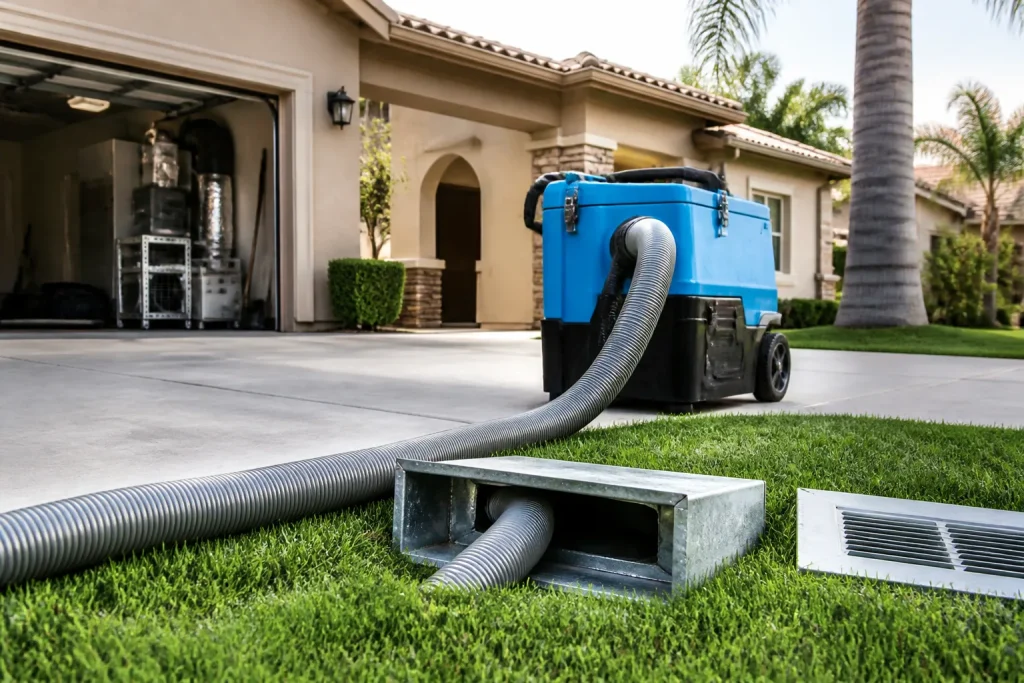
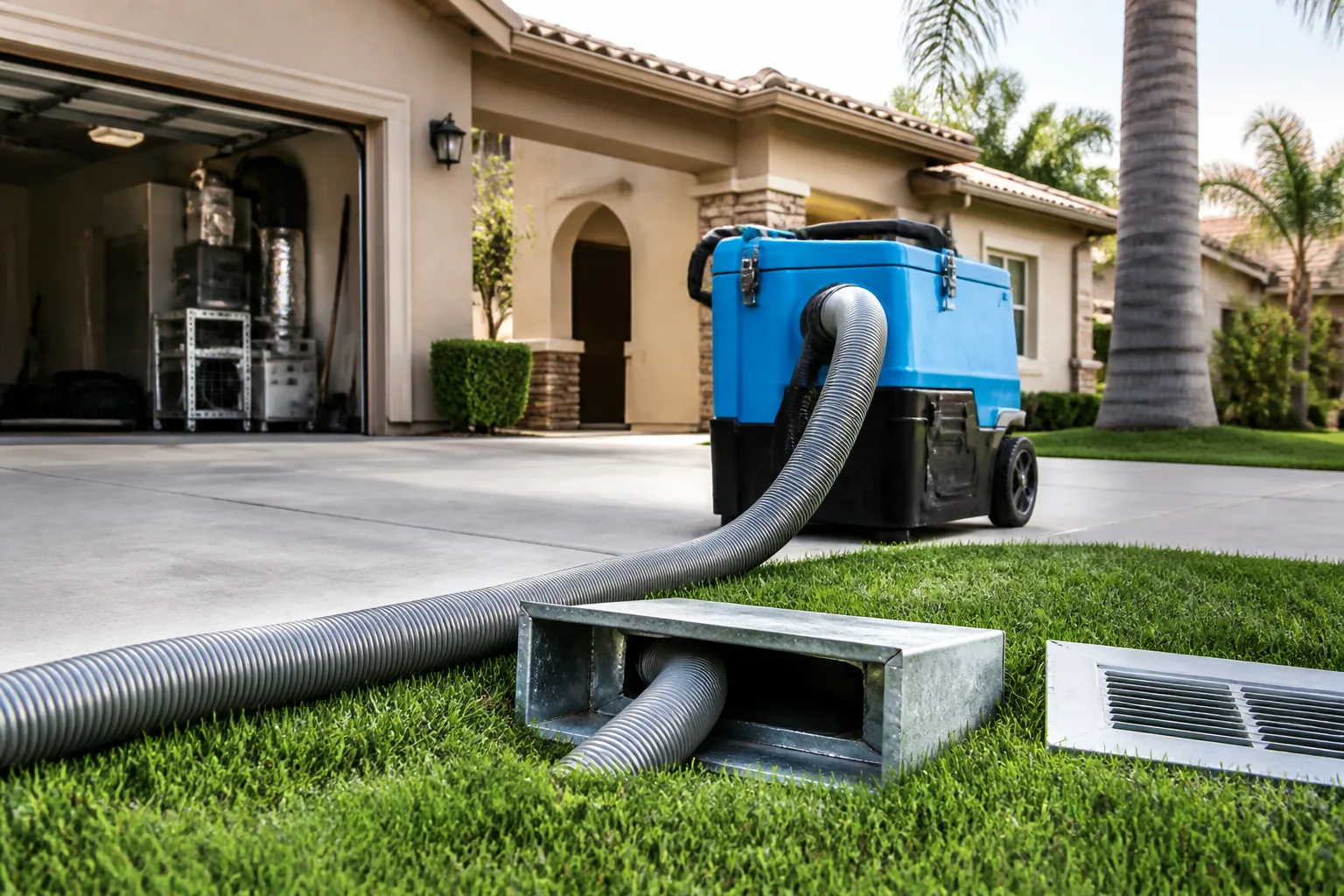
A professional Nikro unit in a residential air duct cleaning job does something consumer-grade equipment physically cannot: it holds the entire duct run under negative pressure while mechanical agitation loosens adhered debris. The fan pulls air backward through the system, carrying dislodged material into a sealed filtration chamber rather than pushing it through the registers into your living room. That’s the difference between cleaning a duct and just rearranging the dust.
We use Nikro and Rotobrush equipment in Buena Park homes for one simple reason: they’re the same machines we’d want on a contamination-sensitive job, and we treat every residential duct system as if the occupant has a reason to care about what’s in the air. We also keep Abatement Technologies equipment on hand for jobs where air-quality concerns go beyond routine buildup.
How Negative Pressure Works in a Residential Duct System
The technical term is source containment. A properly set up negative-pressure duct cleaning creates a continuous inward airflow at every opening in the system. That means any particle dislodged by the brush or agitation tool is immediately drawn toward the collection unit rather than drifting into the room. It’s the same principle a restoration contractor uses to keep mold spores from spreading during remediation.
Here’s the sequence we follow on a typical residential job:
- The main trunk line is accessed and sealed to the vacuum unit, creating negative pressure throughout the entire duct network.
- Each supply and return register is sealed temporarily, so the only significant airflow path is toward the collection unit.
- The technician then opens one run at a time, agitating the interior with a mechanical brush while the negative pressure captures released debris immediately.
- The process repeats until every branch run, the trunk lines, and the return plenum have been accessed and cleaned.
Why does this matter for older Buena Park homes specifically? Many houses in this area were built with flex duct and fiberglass duct board, both of which respond differently to aggressive cleaning than rigid sheet metal. Flex duct has an internal liner that can tear if attacked with the wrong tool. Fiberglass duct board sheds particulate if the interior surface gets abraded too hard. Professional-grade equipment gives the technician control: enough suction to capture debris, enough finesse not to damage the material. A portable unit trying to pull through a sealed residential system simply can’t maintain the static pressure required, so the technician compensates by cleaning “harder” with less effective results.
Three Technical Specs Worth Asking About Before You Book
The duct cleaning industry is full of low-bid operators who count on homeowners not knowing what professional equipment looks like. Here are the three specifications that separate a real setup from a van with a vacuum in it:
- HEPA filtration on the collection unit. This is the non-negotiable one. HEPA-rated final filtration captures 99.97% of particles down to 0.3 microns, which means what enters the machine stays in the machine. Without it, fine dust that’s most likely to irritate allergies gets blown right back out.
- Negative pressure capacity measured in CFM at the point of collection. Professional units move two to three thousand CFM or more. Consumer-grade extractors often move a few hundred. The difference determines whether the system gets held under comprehensive suction or just partially ventilated while dust settles back in.
- Agitation tooling designed for the duct material in your home. Rotobrush systems, for example, use rotating bristle heads sized to the duct diameter. The right head on flex duct versus sheet metal versus duct board are different. The person running the equipment should be able to explain which tooling they’ll use and why before the job starts.
We’ve had homeowners in Buena Park tell us other companies never mentioned any of this. That’s not a coincidence. If the person quoting the job can’t discuss filtration ratings or airflow specs, the equipment likely won’t stand up to scrutiny. Ask anyway.
Why Equipment Class Matters More in Older Buena Park Homes
Buena Park’s housing stock includes a substantial number of homes built between the 1950s and 1980s. Many have had HVAC systems retrofitted, which often means a mix of original rigid duct and added flex runs, or sections of fiberglass duct board used as trunk line construction. A mixed-material system is more fragile than a uniformly sheet-metal install, and it’s also more likely to hide uneven debris distribution.
Here’s the problem with under-powered equipment on those systems: the technician tries to compensate. The brush spins faster or gets jammed harder against the duct walls to dislodge material that the vacuum can’t lift. On flex duct, that risks tearing the liner or separating the inner core from the insulation. On fiberglass board, aggressive brushing can abrade the surface, releasing fibers that then blow into the living space. The equipment becomes the cause of the problem it was supposed to solve.
A properly configured Nikro or Rotobrush setup avoids this by doing the hard work with airflow. The negative pressure does the lifting; the brush’s job is just to break the adhesion between dust and duct surface. When suction is sufficient, agitation can be gentler, which is the entire point of using professional machinery on older, mixed-material systems.
This also matters for the dryer vent cleaning side of the equation. Older Buena Park homes often have dryer vent runs that have been in place for years, accumulating lint in low spots and bends. The same professional extraction principles apply: contain what you’re removing and get all of it out the first time.
Gear Is a Floor, Not a Guarantee
It’s worth being honest about something: the equipment is necessary but not sufficient. A Nikro machine in the hands of someone who doesn’t understand airflow dynamics, doesn’t seal the system properly, or rushes through the branch runs produces a mediocre result with a professional-looking rig. The gear sets the ceiling and the floor, but the technician sets the actual outcome in between.
What does proper use look like? The system gets fully sealed before agitation begins, every register gets accessed individually, and the technician confirms negative pressure at each point before cleaning that run. When we finish a residential job in Buena Park, the system is sealed back up correctly, access points are re-closed with proper fasteners, and the HVAC unit gets a basic post-clean check to confirm airflow is unobstructed.
We also stock and work with Guardsman finishing products for protective and sealant applications after cleaning. Not every job needs it, but when a duct system has surface degradation or the homeowner wants the interior sealed against future particulate adhesion, having those products on hand matters. It’s the kind of thing a company can offer because the technical foundation is already there.
Another equipment-adjacent point: filtration. Your ducts don’t exist in isolation. They’re downstream from whatever filter sits at the HVAC unit, and they connect to every register in the home. We work with Honeywell and Aprilaire filtration systems, and we can speak conversationally about what a media filter versus a basic one-inch fiberglass filter does for post-cleaning air quality. If your system has an Aprilaire cabinet and you’ve been running it with an improper filter size or seal, that’s a real issue. Proper filtration protects the duct cleaning investment.
What to Ask Any Air Duct Cleaning Company
Before anyone sends a truck to your Buena Park home, run through these questions. The answers tell you more than the price does:
- What equipment will you actually use on my system? Listen for brand names and model-level details. “Commercial-grade equipment” is a hand wave. “A Nikro negative air machine and Rotobrush agitation tooling sized to the duct material” is a real answer.
- Does the collection unit have HEPA filtration? Yes or no. No follow-ups.
- How do you seal the system during cleaning? They should describe sealing the trunk line to the vacuum and working branch by branch. If they don’t mention sealing, caution.
- What’s your approach for flex duct versus sheet metal versus duct board? They should have different tooling or at minimum a clear explanation of how they avoid damaging each material.
- Will you show me before and after photos of my own ducts? Not stock photos from a different job. If they won’t commit to this, walk away.
These questions don’t make a homeowner difficult. They make a homeowner informed. The industry has a reputation problem because too many operators built businesses on homeowners not knowing what to ask.
When to Call a Pro
There’s a popular idea that duct cleaning is a homeowner DIY project with a shop vacuum and some vent covers. It’s not. The interior of a residential duct system is inaccessible with consumer tools, which is the whole reason professional equipment exists. You can’t reach the trunk line. You can’t seal the system. You can’t filter the exhaust. You can, however, push dust from the first few feet of a visible duct run deeper into the system, which makes the eventual professional cleaning more involved than it needed to be.
If you can see heavy buildup at the registers, if airflow has clearly diminished, if you bought a home and have no idea what’s in the ducts, or if anyone in the household has persistent allergy symptoms that worsen when the system runs, that’s the point to call. We answer 24/7. Fast dispatch from 7am to 7pm, Sunday through Friday. We’ll schedule a free estimate, inspect the system, and tell you honestly whether cleaning is warranted.
Related services in Buena Park: Duct Cleaning Buena Park covers the full duct system, including cleaning, repair, and dryer vent clearing.
The Bottom Line
Nikro air duct cleaning in Buena Park is the difference between owning the job and hoping for the best. Professional negative-pressure equipment with HEPA filtration and proper agitation tooling is the standard we hold ourselves to because it’s the standard the restoration industry holds itself to. It’s the same approach whether we’re cleaning a residential system, repairing damaged ductwork, or clearing a dryer vent. The equipment matters, the technician matters, and the willingness to show you what’s actually in your ducts before and after matters.
If you’re in Buena Park and want an honest assessment of your duct system, call us at (855) 684-4139. The estimate is free, the price is set per job by the written estimate, and you’ll get a straight answer about what your system needs. We answer 24/7. Fast dispatch from 7am to 7pm, Sunday through Friday.
Frequently Asked Questions
Nikro equipment is built for restoration and remediation work, which means it’s engineered to contain and filter contaminants rather than just move air. The negative-pressure design and HEPA filtration on professional Nikro units capture debris at the point of extraction, which consumer-grade equipment cannot do effectively on a sealed residential duct system.
Pricing is set per job by a written estimate, not by a per-vent price or a coupon-adjusted starting rate. The size of the home, the number of systems, the amount of buildup, and the condition of the ductwork all factor into the quote. You should expect a company using professional-grade equipment to price accordingly – a Nikro setup costs more to own and operate than a portable consumer unit, and that investment shows up in the quality of the work. For an exact quote based on your home, call (855) 684-4139. Estimates are free.
Ask for before-and-after photos of your own duct system, taken with a camera inside the ducts at the same access points. Any legitimate company should provide this without hesitation. The photos should show the interior surface of the trunk line and branch runs, not just the register openings. If a company refuses or only offers stock photos, that’s a red flag.
The answer depends on the home, the occupants, and the system’s filtration. A properly sealed, well-filtered system in a home without pets or smokers may need cleaning once every several years or even less. A home with shedding pets, recent renovation dust, or a history of poor filtration may need it sooner. The best approach is an inspection: a company should be willing to show you the interior condition and let you make the call, not sell you on an arbitrary schedule. Call (855) 684-4139 if you want a free estimate and an honest look at your system.
Written by the team at Duct Cleaning Buena Park, serving Buena Park since 2014.
Need Air Duct Cleaning Help?
Call Duct Cleaning Buena Park - licensed & insured, with free written estimates in Buena Park.
(855) 684-4139